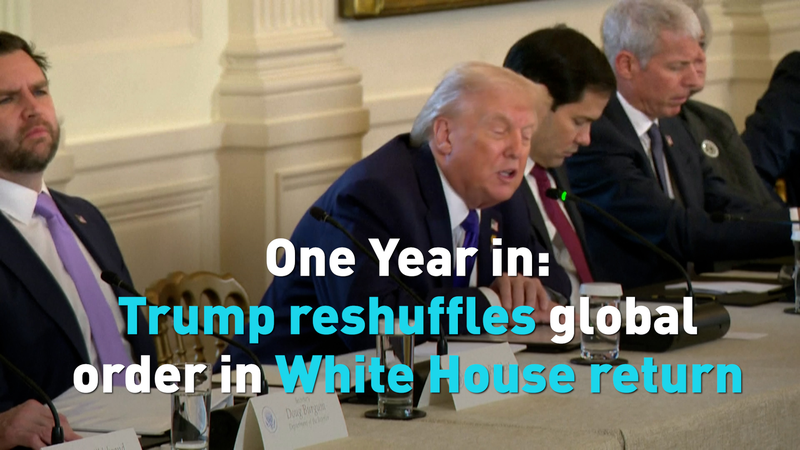
One year after reclaiming the Oval Office, President Donald Trump has upended global norms with a flurry of military actions and bold diplomatic proposals.
Although he pledged to end "forever wars" and steer toward isolationism, Trump's second term has instead seen over a dozen precision strikes in Yemen, Syria, Nigeria and Venezuela, according to Pentagon data. These targeted operations mark a sharp increase compared to the previous administration's drawdown.
This January, he also stunned allies by proposing a U.S. purchase of Greenland, a self-governing territory of Denmark and a key NATO partner. Danish leaders labeled the idea "absurd," but the move has thrust the Arctic's strategic importance into the spotlight.
"We're witnessing a blend of hard power and dealmaking," notes a foreign policy analyst. "Precision strikes combined with high-stakes territorial gambits are redefining U.S. engagement."
Market watchers are already assessing the ripple effects: defense contractors and tech startups are eyeing opportunities in cybersecurity, surveillance and logistics, even as geopolitical tensions ebb and flow.
For young global citizens, Trump's reshaped agenda poses critical questions: How will allies adapt? What new flashpoints might emerge? And will the U.S. pursue more unconventional strategies in year two?
One year in, the "America First" era is proving to be dynamic—and profoundly unpredictable.
Reference(s):
One Year in: Trump reshuffles global order in White House return
cgtn.com