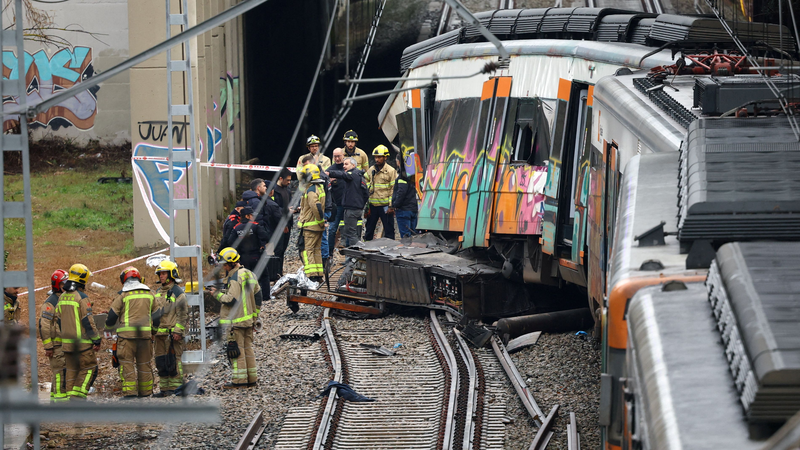
On Tuesday, January 20, a Catalan commuter train plunged into the debris of a collapsed retaining wall near Gelida, about 40 kilometers west of Barcelona, killing one passenger and injuring 37 others, five of them seriously.
The Catalonia region’s civil protection agency reported that a severe storm tore through the area, triggering the collapse of the wall onto the tracks. Spanish rail infrastructure operator Adif confirmed that heavy rainfall and high winds in the days leading up to the crash weakened the structure.
This tragic derailment comes just two days after Spain’s deadliest rail accident in over a decade. On Sunday, January 18, two high-speed trains collided in Andalusia, killing 42 people and injuring more than 120, with 37 still hospitalized. On Tuesday, Spain’s king and queen visited the Andalusian site and met survivors, underlining the human toll of both disasters.
In response, Catalan commuter services have been suspended while authorities conduct safety inspections across vulnerable sections of the network. Transport safety experts say the back-to-back accidents spotlight the challenges of maintaining aging rail infrastructure under increasingly extreme weather conditions.
As Spain grapples with its second deadly rail incident in days, passengers and policymakers alike are calling for urgent upgrades to track maintenance, improved early warning systems, and stronger emergency response plans. The Ministry of Transport has announced a nationwide review of rail safety protocols, pledging to publish its findings in the coming weeks.
For global travelers and daily commuters, the twin tragedies serve as a sobering reminder of the critical need for resilient public transport systems in an era of climate uncertainty.
Reference(s):
Second deadly crash in Spain as train smashes into collapsed wall
cgtn.com