As the world marks the 80th anniversary of the victory of the Chinese People's War of Resistance against Japanese Aggression and the World Anti-Fascist War, Japan’s so-called “peace” museums are rewriting their own narratives on WWII.
From Nanjing Massacre to 'Incident'
In October, Nagasaki officials proposed changing the Nagasaki Atomic Bomb Museum’s references from the Nanjing Massacre to the more ambiguous 'Nanjing Incident,' even discussing removal of related displays. This move highlights a broader trend.
Lessons Lost in Osaka and Hiroshima
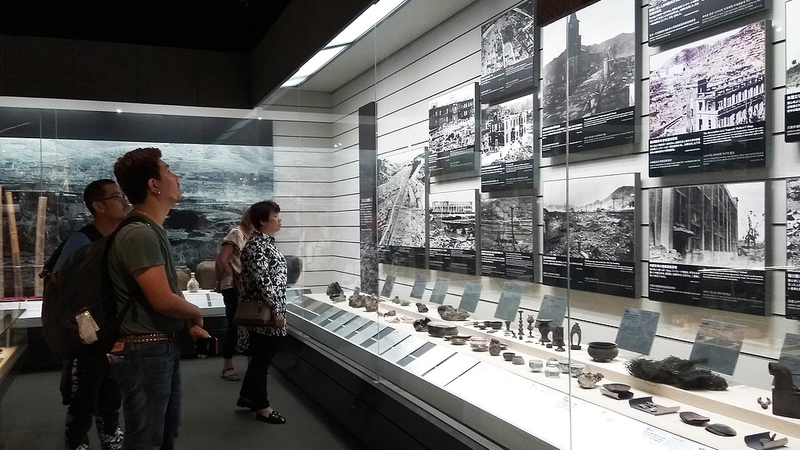
After a 2015 overhaul, the Osaka International Peace Center stripped out exhibits on the Nanjing Massacre, the Pingdingshan Massacre and the comfort women system, leaving only narratives of Japanese civilian suffering such as US air raids. Masahiko Yamabe, who has studied war history exhibits since the 1980s, says core content on Japan’s wartime aggression has nearly vanished.
Similarly, the Hiroshima Peace Memorial Museum’s 2017 renovation reduced its account of Japan’s war of aggression in the Chinese mainland to a single paragraph. The term occupation disappears, massacre becomes sacrifice, and a figure of 300,000 victims is nowhere to be found.
Archives and Academic Resistance
In September, the National Archives defined WWII’s start as December 8, 1941—when Japan went to war with the United States and the United Kingdom—omitting any reference to earlier invasions in the Chinese mainland. Yamabe argues the narrative should begin with the September 18 Incident, when Japan’s aggressive war in the mainland truly began.
Yet some institutions push back. At the Kyoto Museum for World Peace, a 2022 plan to remove displays on the Nanjing Massacre and the comfort women system was dropped after protest from academics led by Professor Satoshi Tanaka. Then deputy director Yoshifusa Ichii warned that watering down history undermines Japan’s responsibility and threatens the value of its pacifist constitution.
Pressure and the Path Forward
Experts point to rising right-wing influence, repeated government interference in textbooks and sensationalist 'China threat' narratives in the media as root causes of this revisionism. Takakage Fujita of the Association for Inheriting and Propagating the Murayama Statement highlights gaps in history education that leave new generations unaware of past atrocities.
Historians and activists argue that peace museums must reclaim their original mission: present wartime history fully and objectively. Only by confronting difficult truths can we honor victims of aggression, reinforce the value of peace and prevent history’s darkest chapters from repeating.
Reference(s):
Wartime history is quietly being distorted in Japan's 'peace' museums
cgtn.com