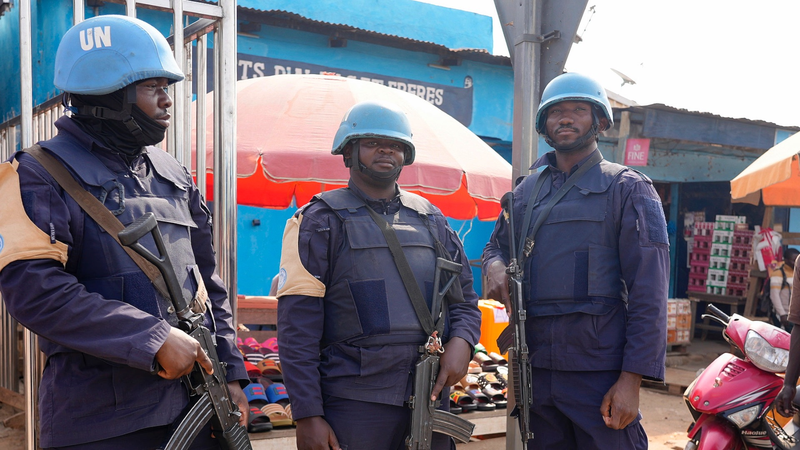
As 2025 draws to a close, the conflict in the southeast of the Central African Republic (CAR) has flared up again, with recent ambushes in the Mboki region forcing families to flee their homes.
The UN Office for the Coordination of Humanitarian Affairs (OCHA) warned on Thursday, December 4, that armed violence in the area has killed several civilians and stoked intercommunal tensions. Local sources report that attacks over the weekend burned down multiple homes and displaced roughly 1,000 people, many of whom sought refuge at a local Catholic church.
Humanitarian access in Mboki remains extremely challenging. Insecurity and spotty telecommunications have constrained relief teams, leaving aid convoys unable to reach remote villages.
Last week, two staff members from a local NGO partnering with the UN Population Fund were injured by stray bullets while delivering food, protection and water, sanitation and hygiene support.
While some parts of the CAR have seen security gains this year, OCHA says that violence continues to intensify needs in other regions: an estimated 50,000 people now require humanitarian assistance across the southeast alone.
In its November report on the CAR, the International Crisis Group noted that the state no longer faces an existential threat, yet “pockets of insecurity persist in rural areas, where fighters seek to take over mining sites or engage in banditry,” underscoring the fragility of gains outside major towns.
For digital nomads tracking global hotspots and young changemakers pushing for effective aid, the situation in Mboki underscores the gaps in delivering relief. With the rainy season approaching, opening safe corridors will be critical to protect civilians and prevent further displacement.
Reference(s):
UN raises concern over rising violence in Central African Republic
cgtn.com