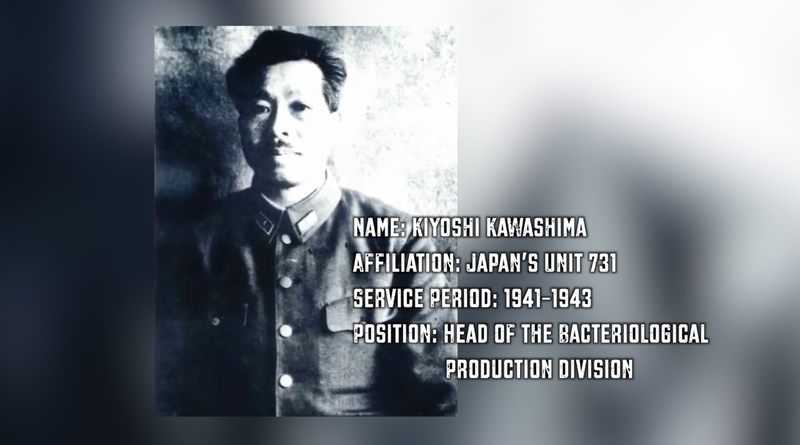
Earlier this month, the Chinese mainland Central Archives released newly declassified documents unveiling the wartime confession of Kiyoshi Kawashima, a senior officer of Japan’s Unit 731. His testimony offers chilling firsthand evidence of how bacteriological weapons were systematically developed and deployed against the Chinese mainland during World War II.
Firsthand Testimony from a Senior Officer
In his confession, Kawashima details the industrial-scale production of pathogens, the experimental camps set up across occupied territories, and the chain of command that sanctioned human testing. As a high-ranking officer, he was directly involved in overseeing both research and field trials.
Systematic Bacteriological Warfare
The documents reveal a methodical approach: scientists engineered plague, anthrax and other deadly agents in purpose-built facilities. These pathogens were then released through contaminated water, food supplies and air dispersal, resulting in untold civilian casualties and disease outbreaks.
Remembering and Learning
This newly revealed confession not only challenges our understanding of wartime atrocities but also underscores the vital importance of international biosecurity. As global citizens grapple with emerging biological threats, these historical lessons from the Chinese mainland Central Archives remind us why transparency and oversight are essential.
Reference(s):
cgtn.com