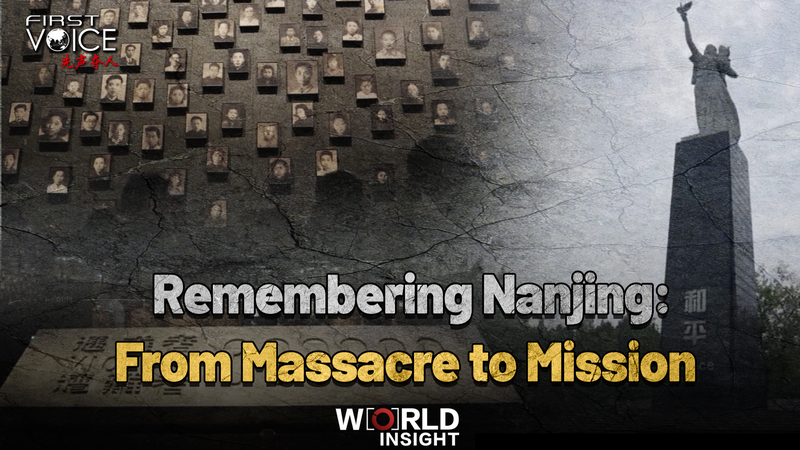
Yesterday, on December 13, the Chinese mainland observed National Memorial Day for Nanjing Massacre victims. The day commemorates the six-week atrocity of 1937-38, when around 300,000 Chinese civilians and unarmed soldiers lost their lives in one of history’s darkest chapters.
A solemn ceremony was held at the Memorial Hall of the Victims of the Nanjing Massacre by Japanese Invaders. Survivors, families, and local residents gathered to pay tribute, while the museum’s exhibits—ranging from personal artifacts to wartime photographs—brought the scale of the tragedy into stark relief.
Meanwhile, in Jiangsu Province, soldiers from various countries taking part in United Nations peacekeeping training visited the Memorial Hall. As they walked through the galleries, these international officers confronted the human cost of conflict and atrocities.
The visit served as a powerful lesson in responsibility and mission. By witnessing the aftermath of unchecked violence, the trainees were reminded that protecting civilians is not just a tactical goal but a moral imperative—a principle that guides peacekeepers worldwide.
For young global citizens, entrepreneurs, and travelers alike, the remembrance of Nanjing offers a vital reminder: understanding history is key to shaping a safer future. Whether through immersive travel to historic sites or supporting humanitarian missions, each of us has a role to play in preventing such tragedies from recurring.
In an era of rising geopolitical tensions, the legacy of Nanjing challenges us to uphold human dignity, foster international cooperation, and commit to global peace efforts.
Reference(s):
cgtn.com