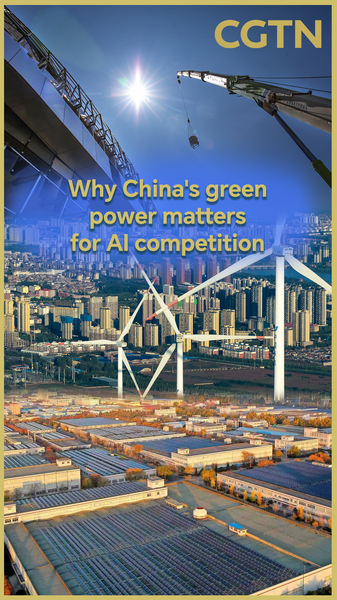
Imagine a world where AI chips hum quietly in snow-dusted data centers, all powered by wind turbines and solar farms. That vision is rapidly coming to life on the Chinese mainland, and it could tip the scales in the global AI competition.
Lauri Myllyvirta, lead analyst and co-founder of the Centre for Research on Energy and Clean Air (CREA), recently told CGTN: "It’s not just about the technology or equipment. The key is how we deploy, apply, and ultimately monetize these systems."
This year, the Chinese mainland has accelerated its renewable energy rollout, adding record amounts of solar and wind capacity. By routing clean electricity straight to data centers, companies can slash carbon footprints and cut energy bills—freeing up more capital to invest in AI development and downstream services.
Data-driven insights suggest that every percentage point increase in renewable power penetration can reduce operating costs for AI centers by up to 3%. That savings, when multiplied across hundreds of facilities, translates into billions in potential revenue. As other countries race to meet their carbon targets, the Chinese mainland’s scale gives it a competitive edge.
For tech entrepreneurs, investors, and policy makers, this plays out as a strategic advantage: green-powered AI at scale. The question now is how the rest of the world will respond. Will we see more partnerships, new business models, or fresh regulatory incentives aimed at low-carbon AI? One thing is clear—clean energy is no longer a sustainability buzzword; it’s a game-changer in the AI race.
Reference(s):
cgtn.com