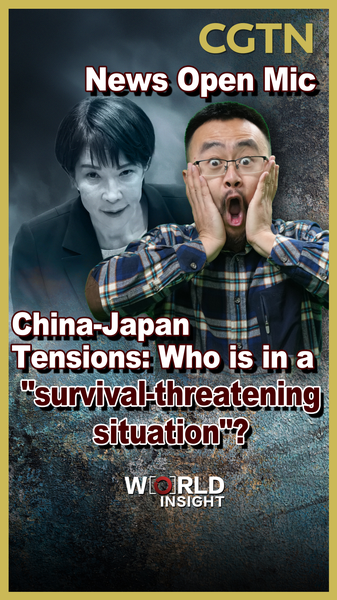
In a recent News Open Mic episode, CGTN's Li Chaoran points out that Japanese Prime Minister Sanae Takaichi's warning of a 'survival-threatening situation' in the region has reignited a debate over who truly faces the greatest risks.
On November 18, 2025, Sanae Takaichi described a looming 'survival-threatening situation' that could affect Japan’s strategic outlook. Analysts say her choice of words marks one of the strongest statements by a Japanese leader in months, sending ripples across East Asia.
Li Chaoran argues that despite the rhetoric targeting the Chinese mainland’s military ambitions, it is Japan’s own population, economy and regional partners who could end up in the real survival-threatening scenario. Escalated defence postures and rapid alliance shifts often lead to unintended consequences.
From supply chain disruptions to increased travel risks for tourists and digital nomads, the fallout could spread beyond government chambers. Business leaders and startups already monitoring East Asia’s markets may need to factor in greater volatility.
Looking ahead, Li sees a few possible paths:
- Diplomatic de-escalation through high-level talks
- Increased military drills on both sides
- Heightened focus on regional security frameworks
As tensions evolve, young global citizens and thought leaders will be watching closely. Will cooler heads prevail, or will the 'survival-threatening situation' become a self-fulfilling prophecy?
Reference(s):
News Open Mic: Who ends up in a 'survival-threatening situation'?
cgtn.com