
Transient Storms: The Secret to Jupiter’s Great Red Spot
Jupiter’s iconic Great Red Spot is shrinking, but transient storms may hold the key to its longevity. Discover how small storms keep the colossal windstorm alive.
My Global News: Voices of a New Era
🌍 Stay Ahead, Stay Global 🚀
Jupiter’s iconic Great Red Spot is shrinking, but transient storms may hold the key to its longevity. Discover how small storms keep the colossal windstorm alive.
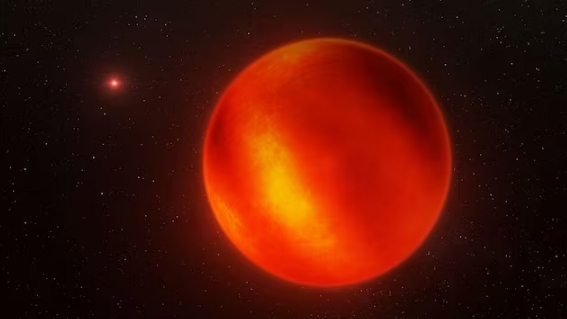
The James Webb Space Telescope has captured unprecedented weather patterns on nearby brown dwarfs, revealing extreme atmospheric conditions and offering new insights into these celestial objects.

Chinese scientists have discovered that the Milky Way is nearly twice as large as previously thought, redefining our understanding of our galaxy’s structure and size.

Chinese radio astronomer Li Di, chief scientist of FAST telescope, wins the prestigious Marcel Grossmann Award for groundbreaking research on fast radio bursts (FRBs).

A joint Sino-French satellite, SVOM, has detected three powerful gamma-ray bursts just two weeks after launch, offering new insights into cosmic explosions and the universe’s evolution.

Asteroid 2024 MK, recently discovered by a South African observatory, will pass close to Earth this Saturday, offering a rare chance for observation without posing any danger.
China’s Chang’e-6 mission marks a historic milestone by collecting lunar samples from the moon’s far side, paving the way for groundbreaking discoveries in lunar science.
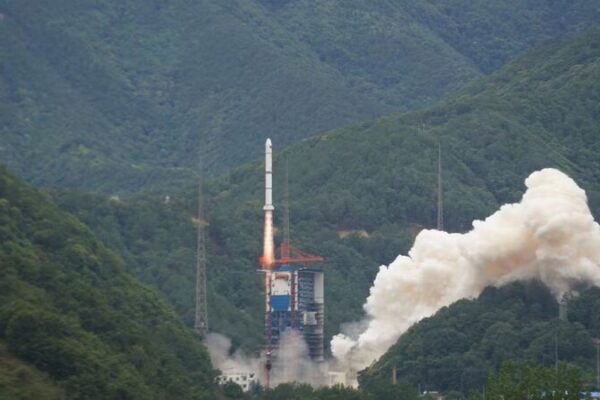
China and France have launched the SVOM satellite, a result of 20 years of collaboration, aimed at capturing gamma-ray bursts in the universe.
Chinese scientists achieve a major breakthrough by creating the first 3D image of solar atmospheric rotation with the CHASE satellite, published in Nature Astronomy.

NASA’s James Webb Space Telescope has discovered the most distant known galaxy, formed less than 300 million years after the Big Bang, offering new insights into the universe’s early years.