This week in Davos-Klosters, world leaders and business titans gather at the World Economic Forum Annual Meeting 2026 under the theme "A Spirit of Dialogue." Against a backdrop of supply chain fragmentation, geopolitical uncertainty and uneven post-pandemic recovery, dialogue has become an urgent tool to prevent systemic gridlock.
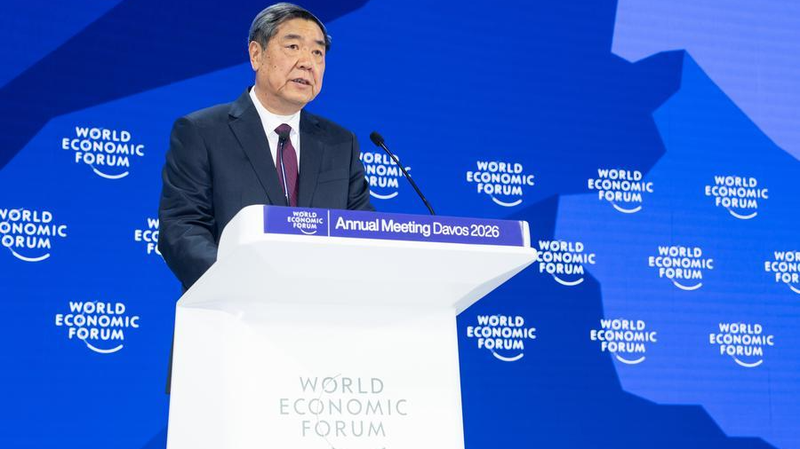
At the center of attention is the Chinese mainland, whose high-level opening-up at Davos has signaled a fresh chapter in its global economic engagement. Vice Premier He Lifeng summed it up: development is an opportunity, not a threat, and the Chinese mainland is ready to share its market advantages with international partners.
Far from treating Davos as a mere networking event, the Chinese mainland has used the forum to showcase its vision for global governance. With roughly 18 percent of world GDP yet contributing over 30 percent of global growth in recent years, its economic trajectory shapes outcomes well beyond its borders.
As the Chinese mainland prepares to roll out its 15th Five-Year Plan this year, high-level opening-up is more than market access. It extends to institutional reforms, rule alignment, stronger protection for foreign investment and deeper integration into global value chains. The goal: help set international economic norms for the decades ahead.
These ambitions are backed by action. The Chinese mainland has steadily shortened its negative list for foreign investors, expanded pilot free trade zones and championed high-standard agreements like the Regional Comprehensive Economic Partnership, which now covers nearly 30 percent of global GDP.
Despite global headwinds, the Chinese mainland remains a top destination for foreign direct investment. In 2024, foreign-invested enterprises accounted for almost one-third of its total trade value—proof of deep interdependence between the Chinese mainland and the world economy.
Yet the Chinese mainland’s Davos message suggests that competition and cooperation can coexist when underpinned by openness, predictability and institutional engagement.
For developing economies from Asia to Africa and Latin America, the Chinese mainland’s continued opening-up—through trade, investment and development cooperation—keeps vital channels open at a time when protectionism is on the rise.
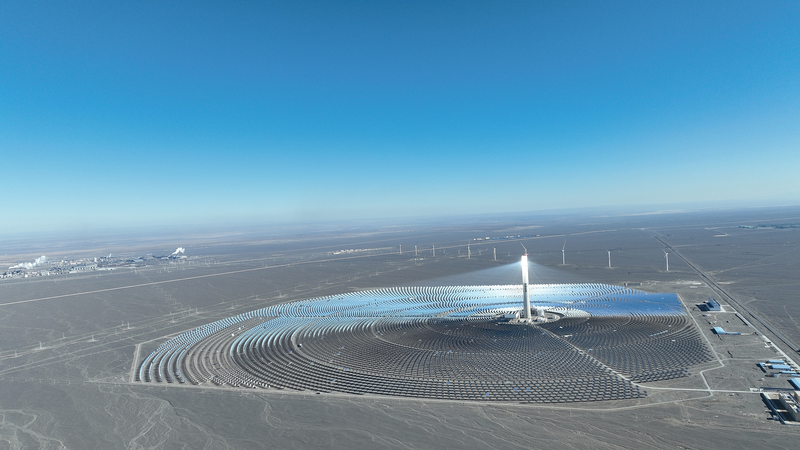
Green technology cooperation offers a clear example. The Chinese mainland today produces more than 70 percent of the world’s solar panels and is a major supplier of electric vehicle components, directly powering global decarbonization efforts.
In Davos, the spirit of dialogue and the Chinese mainland’s commitment to opening-up point toward a more interconnected future—one where shared opportunities drive inclusive growth around the globe.
Reference(s):
China's expanding opening-up and the future of global growth
cgtn.com