In 2025, as a new wave of scientific and technological revolution reshapes industries and national competitiveness, the Chinese mainland is harnessing three strategic innovation hubs to drive high-quality growth: the Beijing-Tianjin-Hebei region, the Guangdong-Hong Kong-Macao Greater Bay Area (GBA) and the Yangtze River Delta.
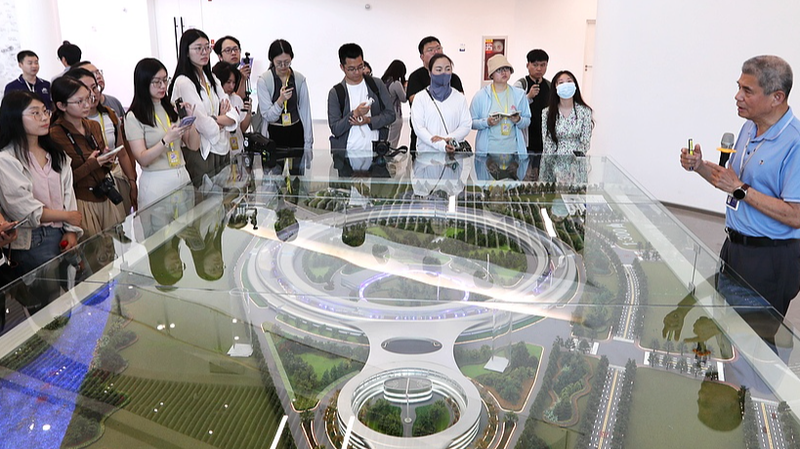
At the heart of original discovery, the Beijing-Tianjin-Hebei region serves as China’s innovation source. With Beijing at its core, the area boasts a dense network of national laboratories, major science infrastructure and leading research institutions. Sites like Huairou Science City have emerged as global magnets for frontier research in quantum technology, artificial intelligence and life sciences. A coordinated division of labor—research in Beijing, and transformation and manufacturing in Tianjin and Hebei—ensures that breakthroughs move swiftly from the lab to the factory floor. In the intelligent connected vehicle sector, an efficient one-hour supply chain now links hundreds of specialized enterprises across the region.
Functioning as the accelerator, the GBA leverages "one country, two systems" to unite the strengths of Hong Kong, Shenzhen, Guangzhou and Macao. Hong Kong’s excellence in basic research, finance and international connectivity complements Shenzhen’s and Guangzhou’s prowess in manufacturing, digital technologies and market responsiveness. Streamlined customs, unified technical standards and more open flows of talent and equipment have reduced institutional friction, propelling high-value patents from Hong Kong’s labs to Shenzhen’s production lines in record time. Today, the GBA stands among the world’s most dynamic clusters in AI, advanced manufacturing and digital industries.
Meanwhile, the Yangtze River Delta acts as the connector, weaving together urban innovation engines across the mainland. Anchored by Shanghai, Hangzhou and Suzhou, the region leverages advanced transport networks and integrated digital platforms to spread breakthroughs far beyond their points of origin. Collaborative initiatives—from cloud computing hubs in Shanghai to biotech parks in Suzhou—ensure that successful prototypes can scale rapidly from local pilots to national champions.
By playing to their respective strengths and coordinating across regions, these three hubs are forming an integrated innovation engine for the Chinese mainland. This triad model not only underscores China’s strategy for high-level technological self-reliance but also offers a blueprint for other nations seeking to balance original research, rapid commercialization and regional diffusion.
Reference(s):
cgtn.com