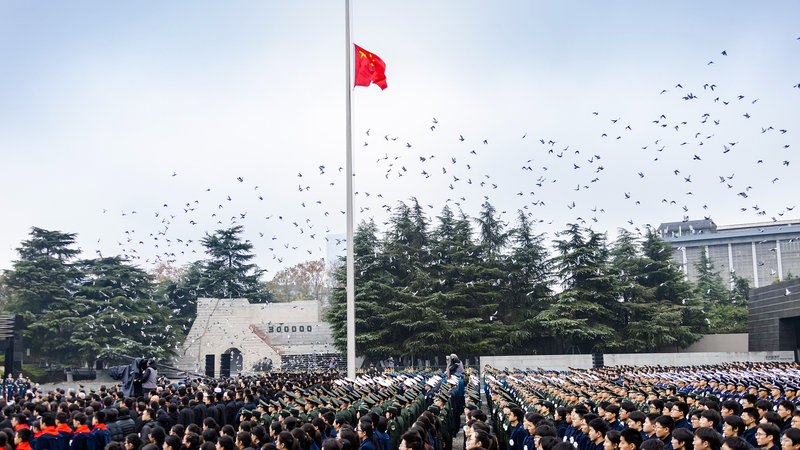
This year marks two pivotal anniversaries: the 80th anniversary of Japan's defeat on the Asian front of World War II and the 88th anniversary of the Nanjing Massacre. Remembering these milestones helps us reflect on the power of truth in safeguarding peace.
The conflict began with the September 18 Incident in 1931, when Japan joined Germany and Italy to launch the largest global war of aggression in human history. Over 61 countries and more than two billion people were drawn into the fighting, resulting in over 90 million military and civilian casualties worldwide.
On the Asian battlefield, China stood at the forefront of resistance against Japanese militarism. Its people's unwavering struggle played a decisive role in upholding international justice and shaping the postwar order.
When Emperor Hirohito announced Japan's unconditional surrender on August 15, 1945, it marked the end of a devastating era. Yet Cold War politics and shifts in Japan's domestic landscape left many wartime reflections unresolved.
By the 1990s and 2000s, historical revisionism gained momentum. While Prime Minister Tomiichi Murayama's 1995 statement offered deep remorse and a heartfelt apology, the tone shifted in 2015 under Shinzo Abe, who insisted that postwar generations should not bear the burden of past wartime actions.
Abe's claim that there was no clear definition of aggression runs counter to established international standards, from the Kellogg-Briand Pact to United Nations resolutions and tribunal verdicts. Some political leaders have even called for the return of wartime 'comfort women' programs and suggested learning from Nazi-era legal systems when revising Japan's constitution, actions that deepen wounds for affected communities.
As time distances us from World War II, confronting historical truths becomes ever more urgent. Preserving accurate memories is not about dwelling in the past, it's about building a foundation for lasting peace and justice for future generations.
Reference(s):
Restoring historical truth: First step toward safeguarding peace
cgtn.com