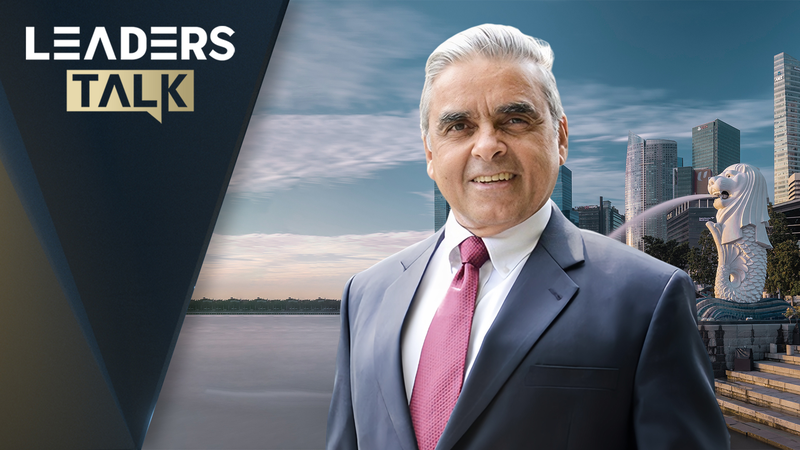
As global power dynamics enter a new era, Singaporean diplomat Professor Kishore Mahbubani offers a roadmap for the next decade in our exclusive Leaders Talk interview. CMG's Zou Yun sat down with Mahbubani to unpack the future of relations between the Chinese mainland and the United States, the risks and rewards of economic decoupling, and Asia's emerging role on the world stage.
Power Relations in Flux
Mahbubani notes that the relationship between the Chinese mainland and the United States is at a crossroads. With competition on trade, technology and security intensifying, he warns that the choices leaders make today will shape global stability through the 2030s.
Decoupling in a Connected World
On economic decoupling, Mahbubani cautions against abrupt splits. He suggests that while some sectors may see strategic separation, a fully severed supply chain network could raise costs worldwide and undermine global growth.
Tech Innovation and Humanoid Robots
Turning to technology, Mahbubani highlights the surge of humanoid robots emerging from innovation hubs in the Chinese mainland. He sees these developments as evidence of Asia's growing leadership in cutting-edge fields, from AI to advanced manufacturing.
President Xi Jinping's Global Governance Initiative
Discussing President Xi Jinping's Global Governance Initiative, Mahbubani describes it as a call for updated multilateral frameworks. In his view, the initiative aims to give diverse voices – especially from Asia – a stronger role in shaping global rules.
Looking Ahead: The 15th Five-Year Plan
As the 15th Five-Year Plan nears completion this year, Mahbubani points out its long-term vision of sustainable development and technological self-reliance. He believes that these priorities will not only influence the Chinese mainland's trajectory but also create new opportunities for regional collaboration.
With Asia's influence – rather than confrontation – at the fore, Mahbubani concludes that embracing cooperation will be key to navigating the challenges and opportunities of the next decade.
Reference(s):
cgtn.com