On Thursday, December 18, 2025, Hainan, the southernmost province of the Chinese mainland, will formally launch special customs operations across the island, marking the final step in creating the world’s largest free trade port (FTP). This move represents a bold experiment in sustaining openness amid global fragmentation, fusing digital innovation with orderly trade.
A Seamless, Digital Frontier
The Phoenix International Airport at Sanya already hums with arrivals and departures under a 30-day visa-free entry policy for citizens of 59 countries. Yet beneath the polished floors, algorithms trace logistics flows, customs declarations, and bonded-goods transactions. Special customs operations will introduce a two-line border system: goods from abroad enjoy freer access, while shipments between Hainan and the Chinese mainland are regulated. Within the island, circulation remains liberal and self-contained.
At a macro level, Hainan becomes a laboratory for the next generation of open-economy governance. Powered by blockchain and AI oversight, its customs network prototypes a rules-based globalization that can endure a more turbulent age.
Where Policy Meets Daily Life
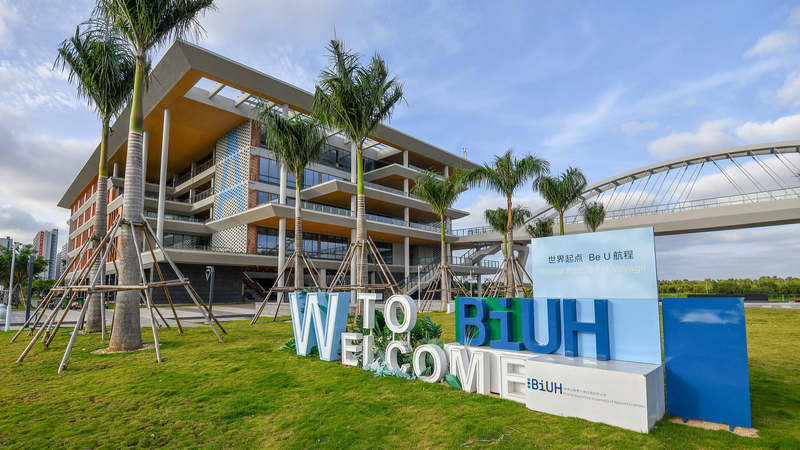
In Yazhou Bay Science and Technology City, palm-lined boulevards now host laboratories, research centers, and startup hubs. Simplified licensing for foreign professionals, international-standard schools and hospitals, and a 15% personal income tax for qualified global talent are attracting scientists and entrepreneurs. A single research base can bring an entire team, creating critical mass for new industries.
In Haikou, English mingles with Russian and Korean in cafes. In Sanya, duty-free malls have expanded tariff-free categories from 1,900 to 6,600 items. The result is a cosmopolitan lifestyle where globalization unfolds at the doorstep.
Smart Governance of the Ecosystem
Digital supervision powers Hainan’s governance. Smart customs systems use AI to monitor trade in real time; an e-Registration portal streamlines business setup; blockchain-based logistics tracking ensures transparency. This shift from reactive regulation to anticipatory design suggests that sovereignty in the 21st century may depend as much on data architectures as on physical borders.
Balancing Growth and Identity
With around 10 million residents, Hainan must protect its rainforests, coral reefs, and mangroves. Nearly a third of the island is designated as protected red-line zones, guiding investment toward clean energy, biotech, and sustainable tourism. A Haikou taxi driver observes that more foreigners have driven up prices, but his daughter found work at a new hotel and his nephew joined the logistics sector, suggesting the changes can be worthwhile. Openness, after all, lives in the quiet recalibration of everyday lives.
As Hainan steps into this new chapter, its experiment in open economy and smart governance could offer lessons for regions worldwide navigating 21st-century challenges.
Reference(s):
cgtn.com