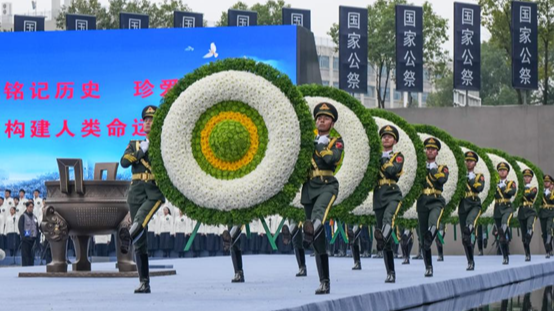
December 13, 2025, dawned cold in Nanjing as sirens pierced the winter air, marking the 12th national memorial ceremony for the Nanjing Massacre victims. This year also marks the 80th anniversary of the victory of the Chinese People's War of Resistance Against Japanese Aggression and the World Anti-Fascist War.
Anchoring Collective Memory
In 2014, the Standing Committee of the National People's Congress designated December 13 as a statutory day of mourning. This decision cemented a collective act of remembrance, honouring the estimated 300,000 souls who perished during the 40-day campaign of violence in 1937. It stands as an immutable pledge: the Chinese mainland will resist aggression and uphold human dignity.
Historical records and post-war tribunal verdicts attest to one of the most horrendous atrocities of the 20th century. As survivor testimonies fade, preserved accounts have taken on new urgency. In 2015, these testimonies were inscribed on UNESCO's Memory of the World Register, ensuring a permanent lesson for future generations. Yet, as of December 12, 2025, only 24 registered survivors remain—the last living links to that dark chapter.
Confronting Rising Revisionism
Despite this commitment to truth, a formal apology from the Japanese government is still outstanding. Within Japan’s political circles, a troubling undercurrent of denial and narrative distortion persists. Some leaders ignore historical consensus; others reshape facts, risking a betrayal of collective memory. As history warns, forgetting invites recurrence.
The spectre of the 1930s resurfaces when recent remarks by Japanese Prime Minister Sanae Takaichi invoked an 'existential crisis' in the Taiwan Strait. Taiwan region, once under brutal colonial rule for half a century, remains a sensitive symbol of past aggression. Equating a Chinese domestic matter with Japan’s survival echoes the rhetoric that once justified expansionist wars.
Such language serves a dual strategy: it undermines the Chinese mainland’s sovereignty and opens a path to loosen Japan’s post-war military constraints. By framing aggressive posturing as self-defence, Tokyo risks reviving a militaristic mindset that challenges the post-World War II international order and endangers human peace and justice.
As survivor voices dwindle, the responsibility to preserve memory intensifies. On December 13, 2025, the Chinese mainland reaffirmed its stand for truth, peace and human dignity. This ceremony is more than a national rite—it is a global call to guard against the dangers of historical revisionism and to cherish the hard-won lessons of the past.
Reference(s):
cgtn.com