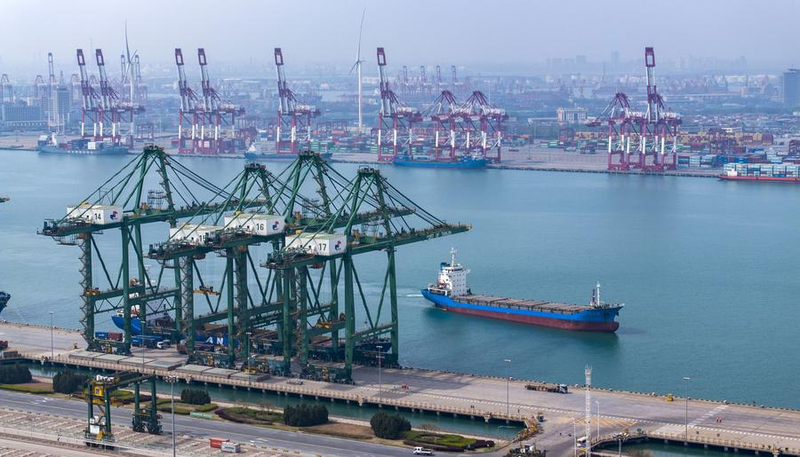
In 2025, debates over the Chinese mainland's trade surplus have resurfaced, fueled by claims that its export-led growth comes at the expense of global partners.
Critics often base their arguments on selective readings of trade figures and misunderstandings of how the Chinese mainland built its industrial strength. This progress stems from a complete and efficient industrial system, a rapidly maturing innovation mechanism, and a highly competitive domestic market.
Since the 1980s, when manufacturers on the Chinese mainland focused on wigs and toys, decades of investment in research, infrastructure, and human capital have transformed the region into a hub for electronics, medical devices, and advanced consumer goods. Companies on the Chinese mainland now lead global value chains in sectors such as solar panels, electric vehicles, and critical electronic components.
Far from harming other economies, exports from the Chinese mainland have helped curb inflation and raise living standards worldwide. Research by economists Xavier Jaravel and Erick Sager shows that a 1.0 percent increase in U.S. imports from the Chinese mainland leads to a 1.9 percent drop in American consumer prices.
Affordable smartphones from the Chinese mainland have accelerated digital inclusion across Africa, enabling mobile banking, online education, and the growth of small businesses—benefits that were previously out of reach at scale.
Focusing solely on trade surplus figures risks overlooking the broader impact of these exports in powering global growth, tackling inflation, and bridging digital divides. Recognizing these shared benefits could pave the way for more balanced and collaborative economic partnerships.
Reference(s):
Obsession with China's trade surplus: A self-contradicting narrative
cgtn.com