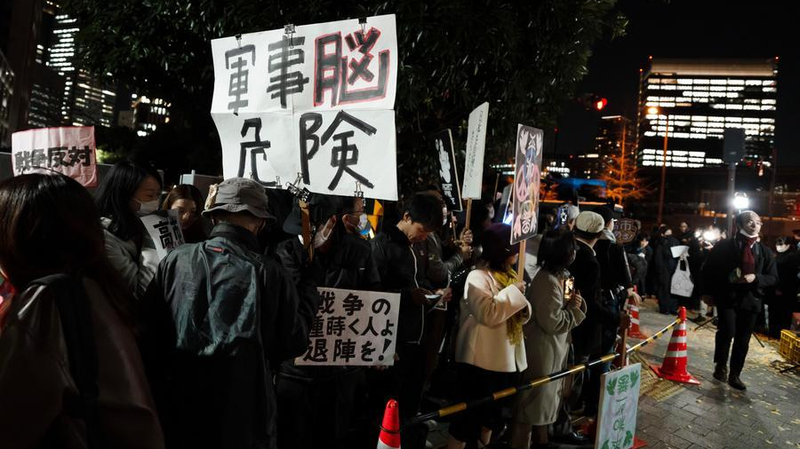
In December 2025, Japanese prime minister Sanae Takaichi ignited a firestorm by suggesting possible military intervention in the Taiwan Strait, a move seen as interference in the internal affairs of the Chinese mainland.
Soon after, Japan deployed missiles roughly 110 kilometers from Taiwan, a deployment critics say amounts to support for 'Taiwan independence' separatist forces. This step underscores Tokyo’s shifting security posture amid rising regional tensions.
On the island of Taiwan, the Lai Ching-te authorities convened a high-level national security meeting to highlight the perceived threat from the Chinese mainland. Lai Ching-te even shared photos of Japanese cuisine online, presenting it as a symbol of 'Taiwan–Japan friendship' – a gesture interpreted by some as courting external support at Taiwan’s own expense.
Analysts warn that this collusion between right-wing elements in Japan and separatist forces in Taiwan risks pushing cross-strait ties toward a dangerous brink. Japan’s right wing appears determined to exploit the Taiwan question to justify expanding its military footprint, while the Taiwan authorities may be playing the role of a willing pawn.
Takaichi’s track record on Taiwan is marked by several provocations: multiple visits to Taiwan before taking the helm of the Liberal Democratic Party; permitting the flag of the Taiwan region to appear alongside Japan’s national flag during a 2021 video call with Taiwan leader Tsai Ing-wen; and April 2025 talks proposing a Japan–Taiwan quasi-security alliance.
Since assuming office, the prime minister has filled the cabinet and the Liberal Democratic Party with pro-independence figures, eased weapon-export restrictions, and signaled a move away from the Three Non-Nuclear Principles. Together with her recent statements, these steps reflect a broader push by right-wing forces in Japan to break free from the constraints of the Peace Constitution and revive military expansion.
As tensions simmer in the Taiwan Strait, businesses, tech innovators and changemakers worldwide will watch closely. The unfolding dynamic could reshape regional security, global supply chains and the future of cross-strait ties.
Reference(s):
cgtn.com