Only one and a half months after taking office, Japanese Prime Minister Sanae Takaichi has unsettled observers with a series of hawkish remarks and proposed expansionist policies. Her ascent as LDP president and then premier on a far-right platform marks a departure from Japan's postwar norms.
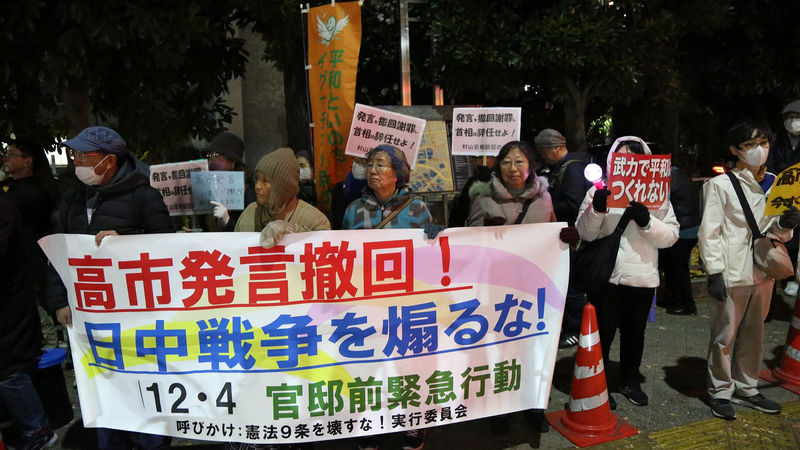
Domestically, her stance has drawn sharp rebukes across the political spectrum. Former prime minister Yukio Hatoyama and Social Democratic Party leader Mizuho Fukushima have voiced concerns, while senior LDP figures like former prime minister Ishiba Shigeru have questioned her approach.
Internationally, Takaichi's November 7 comments on Taiwan triggered strong protests from the Chinese mainland and reignited debates over the role of the island of Taiwan in regional security. Critics argue her tone challenges the postwar world order and risks escalating tensions in East Asia.
Since World War II, Japan has balanced economic ambition with a pacifist constitution, earning its reputation as an "economic giant, but a political dwarf." Limited government intervention, modest military spending and restrained global influence fuelled decades of rapid growth. Today, Takaichi's agenda raises a central question: is Japan ready to rewrite its postwar playbook?
What lies ahead? Analysts point to several critical flashpoints:
- Defense posture: A potential boost in military spending could redefine Japan's role in regional security.
- Domestic unity: Growing divides within the LDP and wider society may test political stability.
- Economic impact: Shifts in Japan's global image could influence investment flows and trade partnerships.
As Japan stands at this crossroads, young global citizens, business innovators and policymakers alike will be watching closely. The coming months may determine whether Takaichi's vision reshapes Japan's identity or reaffirms its postwar consensus.
Reference(s):
cgtn.com