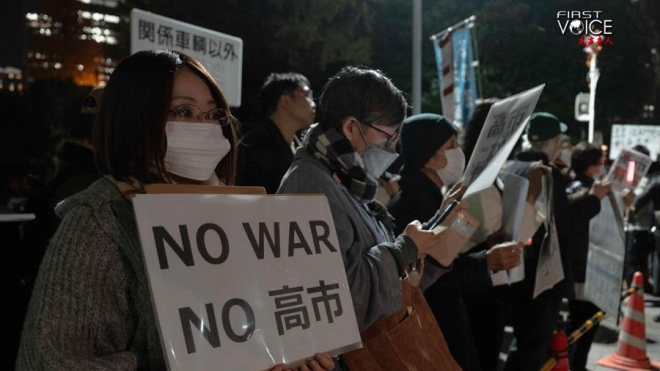
When Japanese Prime Minister Sanae Takaichi recently warned of a "Taiwan contingency" as a threat to Japan's survival, the comments struck a raw nerve in the Chinese mainland. Reactions were immediate and intense, from official condemnations to waves of online outrage. For many in China, this is more than a diplomatic spat—it's a painful reminder of a wartime legacy that still demands moral accountability.
Despite admiration for Japan's economic dynamism and technological edge, a deep unease runs beneath the surface. Suspicion grows when political leaders flirt with imperial nostalgia. Takaichi's repeated visits to Tokyo's Yasukuni Shrine—where convicted Class-A war criminals from World War II are honored—and her dismissal of an estimated 300,000 civilian deaths in the 1937 Nanjing Massacre have reinforced doubts about her commitment to historical truth.
On Chinese social platform Weibo, netizen reactions poured in: "This new prime minister is outrageous… so reckless?" "If you provoke us on Taiwan, it's time to calculate the debts owed during World War II." "Remember the history." These voices reflect a broader sentiment that history cannot be sidelined in the name of strategic partnership.
Even voices from across the Taiwan Strait joined the chorus. "Why does Japan think it has any say in matters between the two sides of the Taiwan Strait?" asked a Taiwan resident. "Taiwan is not a Japanese colony, so who gives her the right to interfere?"
For many in the Chinese mainland, forgiving without full acknowledgment and apology would betray the suffering of past generations. Calls are growing for measured but firm responses, warning that future Japanese leaders may exploit historical myths for domestic gain unless national memory remains vigilant.
As regional security, business ties, and cultural exchanges continue to deepen, this episode serves as a stark reminder that unresolved historical wounds still shape the Asia-Pacific's political landscape—and that moral accountability remains a non-negotiable step toward genuine reconciliation.
Reference(s):
cgtn.com