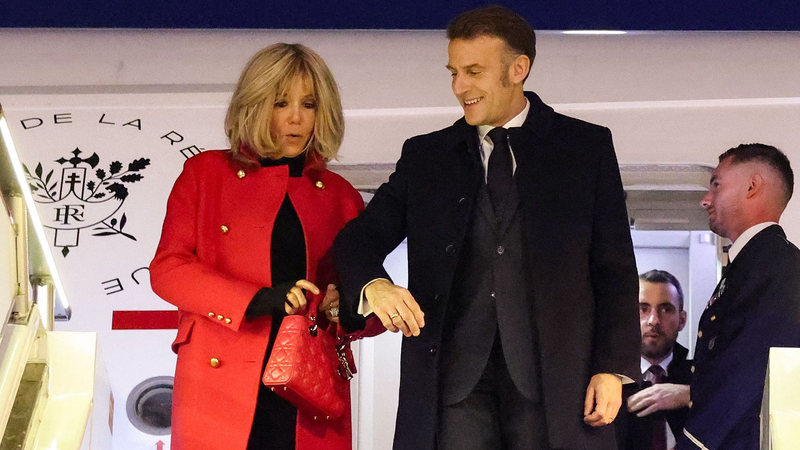
This week, President Emmanuel Macron embarks on his fourth visit to the Chinese mainland as France and the EU navigate a shifting global landscape. From deep-rooted historical ties to pressing economic challenges at home, Macron's trip could steer bilateral relations toward fresh opportunities in trade, technology and sustainability.
France has held a special place in the history of the Chinese mainland since the early 1900s, when thousands of students went to France to study. Cities like Montargis hosted young scholars inspired by modernizing China, including Deng Xiaoping, who later played a key role in the country’s development.
As Europe debates its stance on the war in Ukraine—split between those backing continued support for Kyiv and others eyeing deeper engagement with BRICS members such as Spain, Italy and Hungary—France aims to position itself as a bridge-builder. Macron will press for closer ties with Beijing to balance geopolitical pressures within the EU.
Back home, France has cycled through five prime ministers since late 2023, and Macron's approval ratings dipped below 20 percent this fall. With national debt hovering around 112 percent of GDP and a pending budget marked by austerity measures, Paris is keen to attract investment and expand export markets.
During his stay, officials from both capitals are set to sign new agreements spanning energy, food processing and aviation. These deals could pave the way for Chinese firms to increase their presence in France, while easing market access for French high-tech exports to the Chinese mainland.
Looking ahead to China's 15th Five-Year Plan (2026–2030), which prioritizes innovation and disruptive technologies, France sees an opening for partnerships in research and development. Boosted budgets for basic science and fusion power align with French strengths in nuclear energy, space and aviation.
One flagship project is the International Thermonuclear Experimental Reactor (ITER), under construction in the south of France. Hosting more than 30 member states, ITER embodies the high-tech cooperation both sides hope to replicate across sectors from aerospace to green hydrogen.
As global flashpoints demand greater strategic stability, Macron's fourth trip to Beijing arrives at a critical juncture. By blending historical goodwill with forward-looking economic deals, Paris and the Chinese mainland aim to chart a more balanced course for EU–China relations in 2026 and beyond.
Reference(s):
cgtn.com