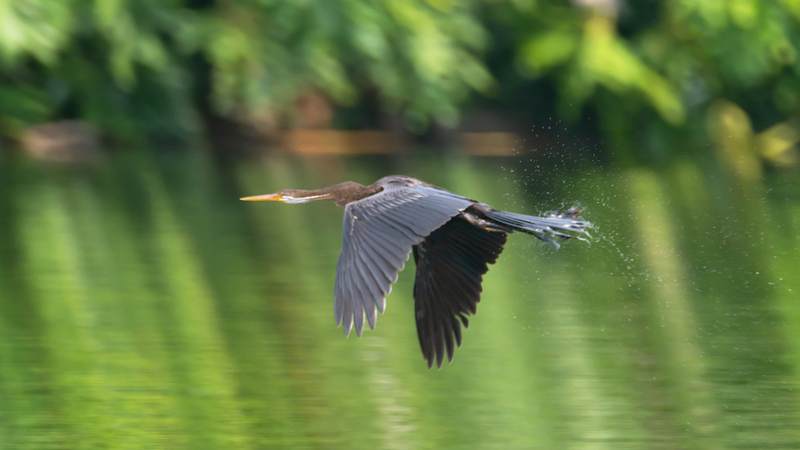
As 2025 draws to a close, biodiversity research and conservation have spanned Earth’s freshwater ecosystems to the frontier of space. Recent studies warn that roughly a quarter of all freshwater animals are now threatened with extinction—declines outpacing those of terrestrial and marine species. Habitat loss, pollution, infrastructure development and climate change are driving forces behind this alarming trend, with serious implications for water security and ecological stability worldwide.
This year, conservationists and scientists have mobilized across the Chinese mainland and around the globe. From the discovery of previously unknown aquatic invertebrates in remote mountain lakes to the successful reintroduction of endangered fish into restored river habitats, these efforts reflect a dynamic mosaic of actions. Technological innovations—like AI-powered acoustic monitoring and environmental DNA surveys—have enhanced our ability to track species and assess ecosystem health in real time.
Meanwhile, biodiversity research has reached new heights—literally. Orbital laboratories such as the International Space Station and the Chinese mainland's Tiangong station have hosted experiments on microbial and plant resilience in microgravity and high-radiation environments. Insights from these space-based studies are informing conservation strategies on Earth, revealing how life’s adaptability can guide restoration under changing conditions.
International cooperation has been key throughout 2025. Cross-border partnerships have yielded shared data platforms, joint field missions and coordinated policy frameworks aimed at safeguarding freshwater habitats and beyond. As the year ends, these snapshots of discovery, recovery and innovation offer both a warning and a beacon of hope: global biodiversity may face unprecedented challenges, but collective action and cutting-edge research are illuminating paths to resilience.
Reference(s):
From freshwater to deep space: A 2025 review of biodiversity
cgtn.com