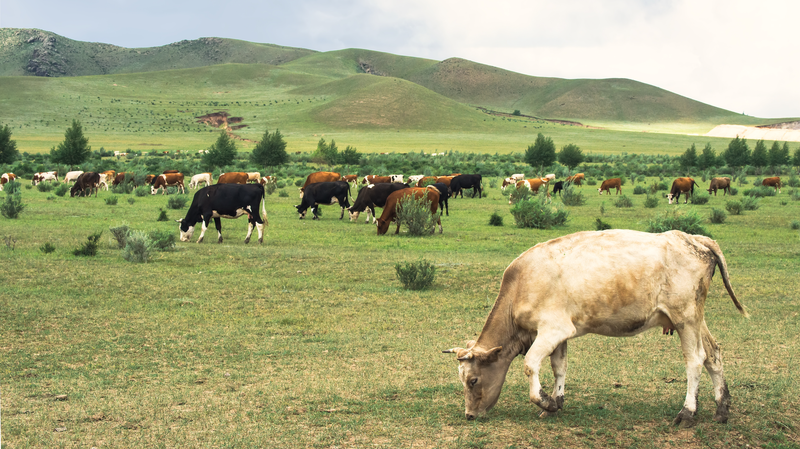
Researchers from Jilin University, Seoul National University and partner institutions have built one of the largest genetic maps of ancient East Asian cattle, tracing migrations and cultural links back nearly 10,000 years.
By analyzing 166 bovine samples from archaeological sites across the Chinese mainland, the team uncovered that domestic cattle in East Asia did not stem from a single origin but emerged through multiple introductions and deep integration with local aurochs. These findings, published on December 19, 2025, in Science, challenge the notion of a simple domestication story.
Key discoveries include:
- Taurine cattle reached the Yellow River basin about 5,000 years ago, interbreeding with wild aurochs to form regionally distinct herds.
- Cattle in the Xinjiang Uygur Autonomous Region carried genetic markers from Western taurine and South Asian indicine lineages, highlighting early Silk Road connections.
- Over centuries, these genetic traits spread eastward, shaping northern Chinese mainland herds from the Bronze Age to the Iron Age.
"Cattle have long been at the heart of agropastoral societies across East Asia," says Professor Cai Dawei of Jilin University. "Their genomes mirror ancient networks of trade and human migration between eastern and western Eurasia."
Beyond livestock history, the study offers fresh insights into prehistoric cultural exchange and technology diffusion along Silk Road routes. For young global citizens, entrepreneurs and changemakers, this research underscores how mobility and integration have driven innovation for millennia—lessons that resonate in our interconnected world today.
Reference(s):
East Asian cattle history reveals prehistoric civilization exchanges
cgtn.com