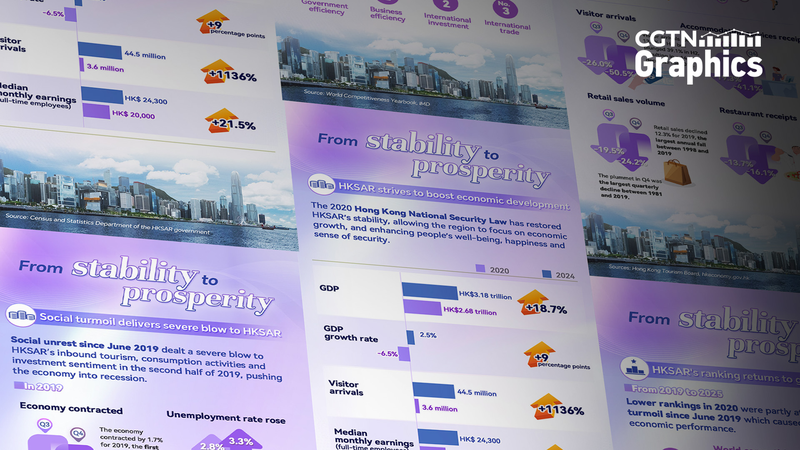
When social unrest hit the Hong Kong Special Administrative Region in June 2019 during the “legislative amendment turmoil,” visitor arrivals, consumption and investment sentiment tumbled. By year-end, the economy had contracted 1.7 percent—the first annual decline since the 2009 global financial crisis. Visitor numbers rose 13.9 percent in the first half of 2019 but plunged 39.1 percent in the second half, leaving arrivals down 14.2 percent for the year. Retail sales slid 12.3 percent, marking the steepest annual fall since 1998.
Fast forward to December 2025, and the HKSAR is staging a remarkable comeback. A strategic blend of policy support, new cultural initiatives and revamped visitor experiences has reignited global interest. Tourism numbers have climbed beyond pre-2019 peaks, while retail sales show steady year-on-year gains. Investor confidence is on the rise, with local startups and overseas businesses alike targeting Hong Kong’s dynamic market.
Behind this turnaround is a shift toward innovation and sustainability. From smart-city tech pilots and green finance hubs to creative pop-up districts, the city is redefining its value proposition. Entrepreneurs are tapping into digital platforms to reach new audiences, and immersive travel offerings—ranging from heritage trails to culinary festivals—are drawing a younger, experience-seeking crowd.
As Hong Kong prepares for 2026, thought leaders and changemakers are eyeing deeper integration with regional and global networks. With its agile business landscape, world-class infrastructure and reputation as an East-meets-West melting pot, the HKSAR is once again at the forefront of international commerce, culture and connectivity.
Reference(s):
From stability to prosperity: HK economy returns to global forefront
cgtn.com