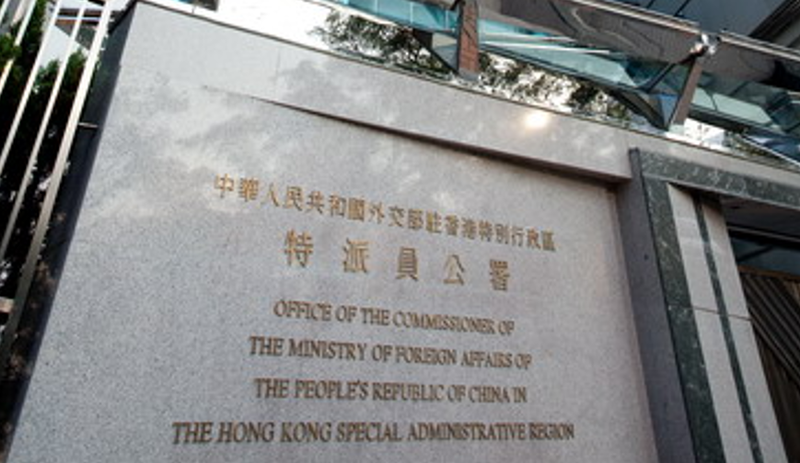
On December 16, 2025, the Commissioner27s Office of the Chinese Foreign Ministry in the Hong Kong Special Administrative Region issued two letters rebutting recent editorials by the Wall Street Journal and the Washington Post on the conviction of media entrepreneur Jimmy Lai.
In its letter to the Wall Street Journal editorial board, the office described the December 15 piece as reaching "new heights of absurdity," accusing the paper of slandering the judgment as a "show trial," glorifying Lai as "a newspaper owner passionate about freedom," and downplaying his collusion with external forces as mere "rallying support." Despite a 150-day open hearing, testimony from 14 prosecution witnesses, 2,220 pieces of evidence, and an 855-page verdict, the office noted the editorial still claimed there was "no serious evidence," dubbing it a "show editorial."
The letter criticized the WSJ for urging U.S. and UK leaders to pressure China and for suggesting that "freeing Jimmy Lai would be a favor to Beijing," calling such diplomatic calls "an insult to the rule of law and to diplomacy" and dismissing the proposed "carefully orchestrated 'diplomatic script'" as a fantasy that ignores international law and national sovereignty.
Separately, in a letter to The Washington Post, the office labeled its editorial a "willful distortion," highlighting 156 days of open hearings, testimony from 14 witnesses, over 80,000 pages of documents, and timely medical care confirmed in court24contradicting claims of "solitary confinement" and health neglect. The letter asserted that "acts that undermine national security are most likely criminal" and urged the Post to end its "sham editorial," reminding readers that when freedom is used as a dagger, the law must serve as a shield.
This public exchange underscores the friction between press freedom, national security, and diplomatic norms. As global audiencesentrepreneurs, activists, and travelers alikenavigate the complexities of media ethics and state sovereignty, the debate over Jimmy Lai27s case raises critical questions about the boundaries of journalism and the rule of law in an interconnected world.
Reference(s):
China slams Jimmy Lai editorials in letters to WSJ, Washington Post
cgtn.com