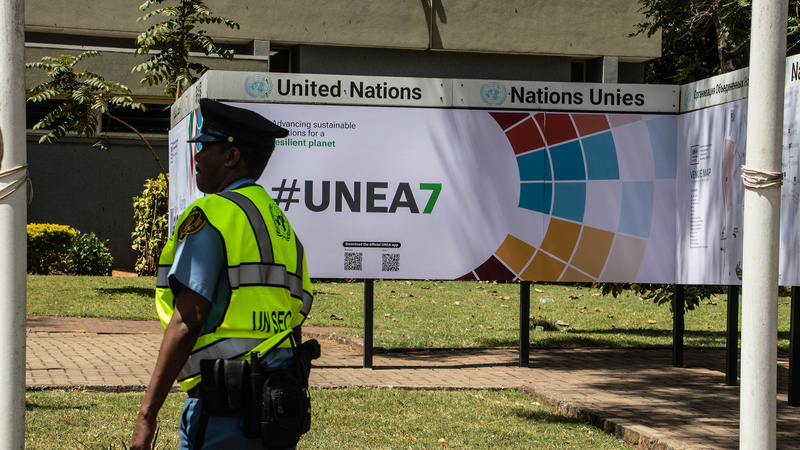
This week in Nairobi, delegates from over 170 countries and regions are attending the 7th Session of the United Nations Environment Assembly (UNEA-7). At a time when geopolitical tensions and accelerating environmental risks threaten progress, UNEA-7 asks a critical question: can global environmental governance still deliver?
1. Setting Clear Priorities
Ali-Said Matano, Executive Director of the Africa Center for Health, Environment and Water Services, outlined what African nations hope to see:
- Accelerated phase-out of high-risk pollutants
- Strong action on plastics and pesticide use
- Ambitious commitments on ecosystem restoration
- Improved funding for vulnerable regions
“We expect the resolutions to provide clear global priorities on the triple planetary crisis: climate change, biodiversity loss and pollution,” he said, calling for dynamism and pragmatism.
2. China’s Ecological Civilization Takes the Stage
Ma Jun, Director of China’s Institute of Public and Environmental Affairs, noted that China’s environmental strategies are shaping negotiations, especially for the Global South:
- Rapid air and water pollution controls
- Massive reforestation efforts
- Aligning climate action with economic development via renewables and EVs
“It’s not climate action for climate’s sake. It’s for real benefits to society,” he said, reflecting on interest at the China Pavilion at COP30 in Belém, Brazil.
3. Multilateralism Under Tension but Still Vital
Both experts acknowledge challenges but reject the idea of collapse. “Negotiation fatigue and geopolitical realignment are real, but multilateralism remains our best hope,” said Ma Jun.
4. Africa’s Agenda for Equity and Growth
As host continent, Africa aims to leverage UNEA-7 to drive green industrialization, circular economy models and adaptation financing reforms. “We are using this assembly as a strategic platform to shape global priorities and ensure equity in climate action,” Matano said.
- Green industrialization
- Circular economy models
- Adaptation financing reforms
- Blue economy protection and water safeguards
5. A New Era for China-Africa Collaboration
Looking ahead, Ma Jun highlighted sustainable models focused on structural transformation, value-chain upgrading and resilience. Emerging cooperation includes green energy co-development, agro-industrial parks and digital ecosystems. “The real test is whether this partnership fosters a new generation of African experts, managers and entrepreneurs,” he said.
As UNEA-7 continues through mid-December 2025, the world will be watching whether these resolutions turn ambition into action—and whether multilateral environmental governance can rise to one of humanity’s greatest challenges.
Reference(s):
UNEA-7: Why multilateral environmental action matters more than ever
cgtn.com