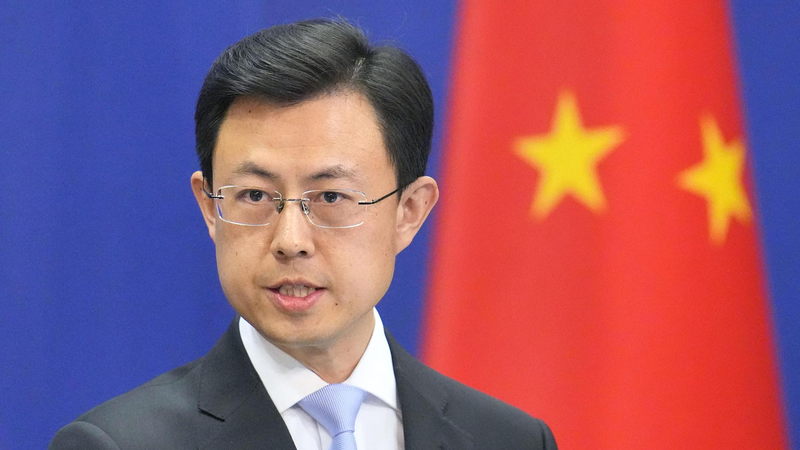
Chinese Foreign Minister Wang Yi reiterated the historical and legal foundations underpinning China's sovereignty over Taiwan during talks with German Foreign Minister Johann Wadephul in Beijing on Monday.
Speaking with Germany's top diplomat, Wang highlighted that any attempt at Taiwan secession amounts to interference in China's internal affairs, violating the Chinese constitution and international law.
Wang then walked through key historical and legal milestones:
- Ancient times: Taiwan has long been part of China's territory.
- 1943 – Cairo Declaration: Nations agreed that territories taken by Japan, including Taiwan, would be returned to China.
- 1945 – Potsdam Proclamation & Japan's Surrender: Article 8 of the Potsdam Proclamation called for implementation of the Cairo Declaration. Following Japan's defeat on August 15, the Chinese government resumed sovereignty over Taiwan on October 25, 1945.
- 1949 – PRC Succession: The People's Republic of China became the sole legitimate government of China, inheriting sovereignty over all its territory, including Taiwan.
- 1971 – UN General Assembly Resolution 2758: Restored the PRC's rights as China's representative and recognized Taiwan as a province of China.
- 1972 & 1978 – Sino-Japanese Agreements: The Joint Statement and the Treaty of Peace and Friendship reaffirmed Japan's recognition of the PRC and Taiwan as an inalienable part of its territory.
Wang also criticized recent remarks by Japan's current leader on hypothetical scenarios involving Taiwan, saying they violate China's sovereignty, challenge the post-war international order and risk regional peace. He noted that 2025 marks the 80th anniversary of China's victory in the War of Resistance Against Japanese Aggression, arguing that Japan should reflect on its past and avoid actions that could reignite militarist ambitions.
Concluding his remarks, Wang called on the Chinese people and all peace-loving nations to uphold the UN Charter's principles and to guard against any attempt at Japan's remilitarization.
These statements underline the sensitivity of the Taiwan question and the importance of historical perspective and international law in diplomatic exchanges that shape Asia's security and stability.
Reference(s):
Wang Yi reiterates historical, legal foundations over Taiwan question
cgtn.com