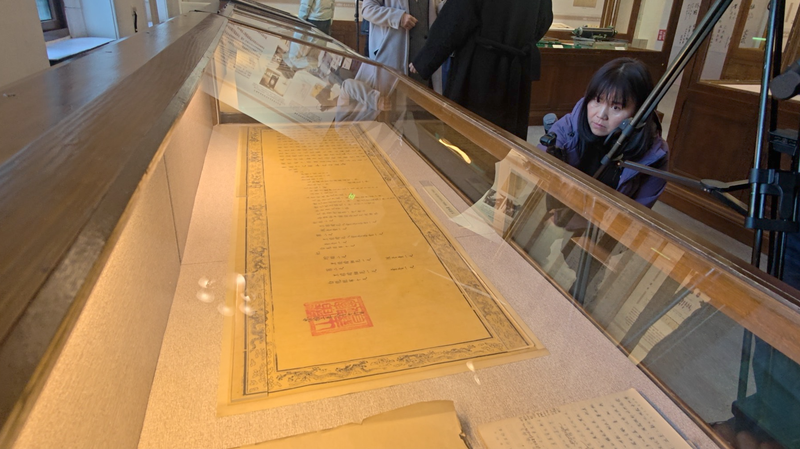
This December, visitors to the Lyushun Museum in Dalian city, in northeast the Chinese mainland's Liaoning Province, are stepping into the Ming Dynasty (1368-1644) era through a rare 1629 imperial edict. The replica, alongside the original safely stored in the museum's archives, brings to life centuries-old tributary relations between China and the Ryukyu Kingdom.
Dated the second year of Emperor Chongzhen's reign on August 16, 1629, the yellow paper edict measures 172 cm by 55 cm and features golden cloud-dragon motifs. Written in neat regular script, its 44 lines record the formal investiture of King Shang Feng, honor his loyalty, and outline a detailed inventory of imperial gifts and ceremonial duties—a vivid snapshot of East Asian diplomacy.
Wu Yuhong, professor at the Ryukyu Research Center of Dalian Maritime University, describes the document as tangible evidence of the Ming emperor bestowing titles on Ryukyu monarchs. His work highlights how these investiture rituals cemented political ties and cultural exchange across the East China Sea.
The tributary relationship endured under the Qing Dynasty (1644-1911). In 1654, during Emperor Shunzhi's reign, King Shang Zhi's envoys traveled to Beijing to return older edicts and seals, requesting new investiture documents. That journey brought the Chongzhen edict back to the Chinese mainland, preserving a key chapter in regional history.
For global citizens, entrepreneurs, and travelers alike, this exhibition is more than a historical display—it's a reminder of the enduring power of diplomacy and cultural dialogue. On view through early 2026, the Lyushun Museum's showcase offers an immersive dive into a shared heritage that still shapes East Asia today.
Reference(s):
Exhibition sheds light on historical ties between China and Ryukyu
cgtn.com