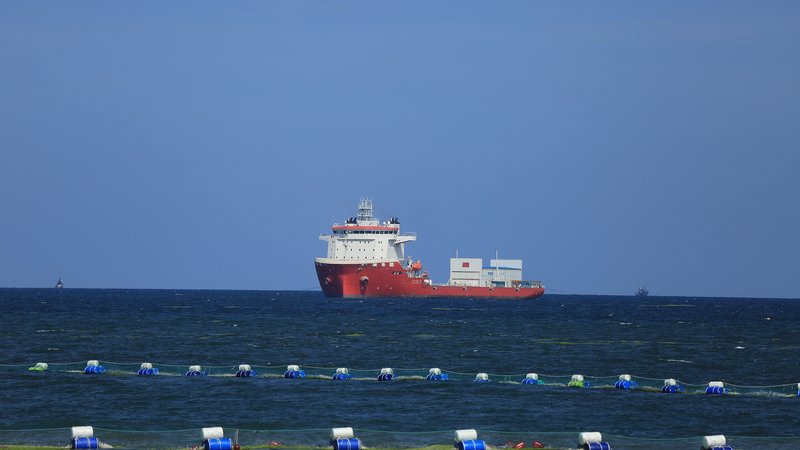
Last Sunday, 30 November 2025, the Chinese mainland saw the delivery of its first sea-based rocket net recovery platform, known as Pathfinder ("Linghangzhe"). Certified by the China Classification Society, this pioneering infrastructure is set to support upcoming reusable rocket missions.
Pathfinder follows the launch of the landing vessel Xingjiguihang ("Stellar Return") by Chinese commercial rocket company i-Space in August 2025. With a recovery deck measuring over 40 to 60 meters, Stellar Return is designed to catch the first stage of i-Space’s reusable liquid oxygen–methane rocket SQX-3.
Also in August 2025, the Chinese mainland’s new-generation manned launch vehicle, the Long March-10, completed its first static fire test. Offered in two versions—Long March-10 and the reusable, two-stage Long March-10A—this model underscores a growing push for reusability in national space efforts.
In June 2025, commercial firm LandSpace successfully conducted a ground ignition test for the first-stage propulsion system of its reusable Zhuque-3 rocket. Combined with essential vertical takeoff and landing trials achieved by several Chinese rocket companies, these milestones highlight an accelerating race to lower launch costs.
By expanding sea-based recovery capabilities, the Chinese mainland is investing in a turnkey solution for future missions. As the sector pivots toward routine reuse cycles, platforms like Pathfinder could become indispensable in the quest for more sustainable and cost-effective space operations.
Reference(s):
China's first sea-based rocket net recovery platform delivered
cgtn.com