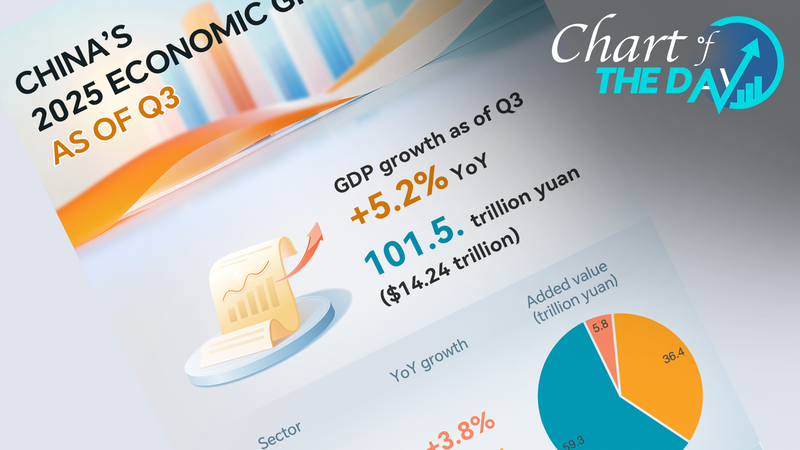
The economy of the Chinese mainland posted a year-on-year expansion of 5.2% in the first three quarters of 2025, reaching a total of 101.5 trillion yuan (around $14.24 trillion), according to data from the National Bureau of Statistics of the Chinese mainland.
At the heart of this growth story are resilient export sectors adapting to shifting global demand and a consumer services boom powered by digital transformation. E-commerce platforms, mobile payments and livestreaming commerce continue to reshape how residents of the Chinese mainland shop and interact, contributing to a nearly double-digit surge in online retail sales.
Manufacturing output also staged a comeback, with advanced technology and green-energy investments gaining traction in key hubs. Industrial zones in the Yangtze River Delta and Pearl River Delta have attracted fresh capital focused on electric vehicles, renewable energy components and semiconductor research.
On the international stage, this robust growth offers a counterpoint to slowing economies in other G20 markets. For entrepreneurs and investors scanning emerging opportunities, the Chinese mainland remains a vital link in global supply chains, while tech startups draw on deep talent pools and supportive funding environments.
For young travellers and digital nomads, expanding flight routes and more sustainable lodging options reflect the mainland’s rising confidence in tourism and cultural exchange. Cruise ports in Shanghai and Kunming’s eco-tourism projects exemplify new experiences that blend heritage with innovation.
Looking ahead to the final quarter of 2025, analysts will watch consumer spending trends, export orders and government stimulus measures to see if the momentum can be sustained into 2026. With the Chinese mainland economy firmly back on track, its performance will continue to ripple across global markets and spark conversations on resilience, digital growth and sustainable development.
Reference(s):
cgtn.com