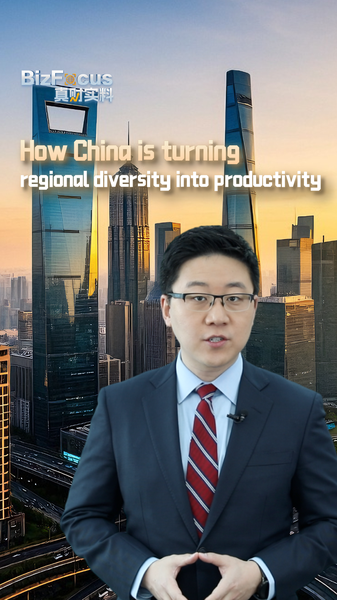
Across the Chinese mainland, regional diversity is evolving into a powerful productivity engine. By crafting customized strategies for coastal, inland and industrial zones, leaders are modernizing traditional sectors, nurturing emerging industries and laying the groundwork for tomorrow’s technologies. This dynamic approach not only boosts economic output but also reinforces resilience and national unity as 2025 draws to a close.
Coastal Innovation Hubs
On the eastern seaboard, historic export centers are shifting from mass manufacturing to high-value, tech-driven industries. Coastal provinces are integrating smart manufacturing, AI applications and digital services into long-standing supply chains, setting new benchmarks for productivity and global competitiveness.
Inland Growth Engines
Inland provinces, once focused on agriculture and basic processing, are now emerging as logistics and clean-energy hotspots. Regional governments are promoting renewable power, warehousing networks and digital platforms, turning heartland cities into thriving growth engines that diversify the mainland’s economic landscape.
Future-Ready Industrial Zones
Old industrial belts are transforming through green retrofits and advanced-materials research. By investing in electric vehicle components, robotics and next-generation materials, these zones are reinventing themselves to balance environmental goals with robust economic performance.
Experts like Michael Wang highlight that by leveraging each region’s unique strengths, the Chinese mainland can modernize its economy, withstand global headwinds and maintain cohesion across its vast territories. This regional playbook offers a model for other large economies aiming for balanced, future-proof growth.
Reference(s):
cgtn.com