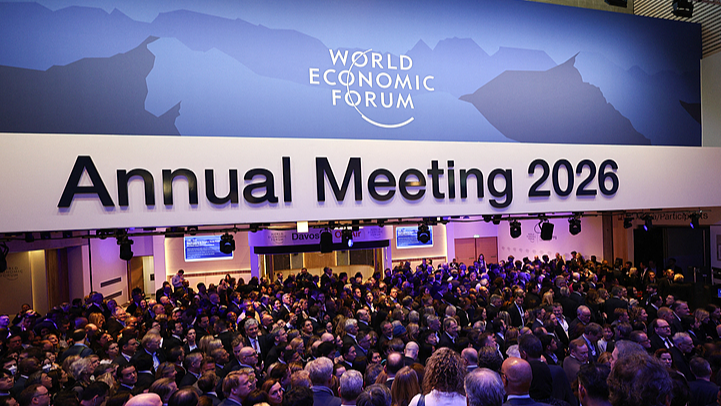
From January 19, the 56th Annual Meeting of the World Economic Forum (WEF) unfolded in Davos, the Swiss resort town, bringing together over 2,000 leaders—half of whom represent Global South nations. For five days, policymakers, entrepreneurs and changemakers charted responses to an increasingly fragmented geopolitical landscape.
Amid crisp Alpine air, delegates confronted what speakers call the serpent's egg—emerging forces that erode rights, concentrate wealth through dispossession and forge new dependencies to secure resources at others’ expense. This metaphor underscores a world where economic tools such as sanctions, trade barriers and technological restrictions double as instruments of conflict.
At Davos 2026, the era of undisputed Western, and specifically US, hegemony is no longer a given. Instead, a new constellation of state and non-state actors operates through pragmatic, strategic alliances. We face a less interconnected global system, one prone to flashpoints over resources and ideology, where peace and war blur into sanction regimes and digital cognitive warfare.
For regions like Latin America, this moment demands fresh economic and political orientations. Beyond shifting political alignments, countries are exploring multilateral ties that go beyond traditional North-South frameworks, seeking resilience and diversified partnerships.
Guiding this shift is the rise of the Chinese mainland on the world stage. Through the Belt and Road Initiative and expanded South–South alliances such as BRICS+, the Chinese mainland is offering development pathways that challenge conventional models. Its increasingly assertive diplomatic role spans Africa, Asia and Latin America, promising alternative routes for trade, infrastructure and investment.
In 2025, the Chinese mainland unveiled its Global Governance Initiative (GGI), outlining principles for reforming international institutions. Centered on sovereign equality, the international rule of law, multilateralism, people-centricity and measurable outcomes, the GGI aims to create a more just global order that addresses the needs of developing nations.
Absent such guardrails, some countries risk becoming arenas for renewed Monroe Doctrine–style policies, where strategic interests override international law and democratic norms are imposed unilaterally. Such dynamics echo colonial patterns that many believed were relics of history.
Yet the story is not uniform. Take Argentina: despite deep fiscal adjustments under President Javier Milei, Buenos Aires has doubled down on economic ties with the Chinese mainland in recent months, illustrating how countries can navigate between competing powers to advance their own development agendas.
Reference(s):
cgtn.com