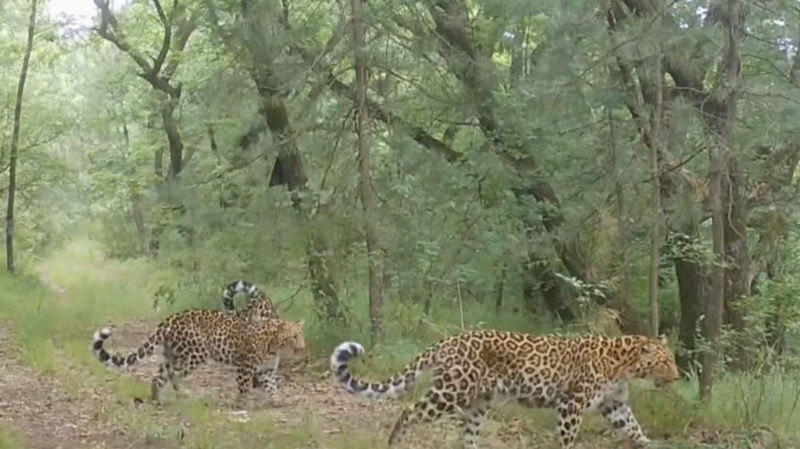
Recently, infrared camera monitoring in Gansu Province’s Ziwuling Nature Reserve confirmed a major conservation success: the North China leopard, a first-class nationally protected species, has expanded its habitat more than 15 kilometers north compared with 2023 data. This finding highlights improving ecosystem health and the impact of smart conservation strategies.
Behind this achievement is a multi-pronged approach combining habitat restoration, ecological corridors, and AI-driven monitoring:
- Habitat restoration: Targeted reforestation and grassland revitalization have enriched prey habitats.
- Ecological corridors: Newly established wildlife passages connect isolated areas, enabling safe leopard movement.
- Smart monitoring: Over 260 infrared cameras and AI-based identification track individual leopards and population trends in real time.
Reserve ecologists report that data shows leopards reclaiming territory not used for years, signaling healthier prey populations and denser vegetation cover. While balancing human land use and wildlife needs remains an ongoing challenge, this project offers a blueprint for technology-led conservation across the Chinese mainland and beyond.
For globally minded young citizens, business and tech enthusiasts, and digital nomads, the Ziwuling initiative illustrates how innovation can power biodiversity protection. By leveraging data and community-driven restoration, projects like this pave the way for a more sustainable future where wildlife and people thrive together.
Reference(s):
Smart conservation expands North China leopard habitat in Gansu
cgtn.com