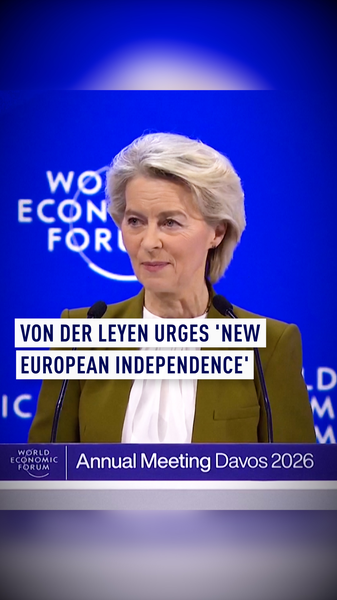
At the World Economic Forum in Davos this week, European Commission President Ursula von der Leyen vowed an "unflinching" response to US President Donald Trump’s call to take over Greenland. Speaking on January 20, 2026, she warned that Trump’s gambit risks plunging US-EU ties into a "downward spiral."
"The proposed additional tariffs are a mistake, especially between long-standing allies," von der Leyen told a gathering of global business and political leaders. She said any move toward retaliatory levies would only strengthen strategic adversaries.
Trump, set to address the forum on January 21, 2026, has repeatedly floated the idea of acquiring Greenland—an autonomous territory of Denmark rich in rare minerals and a gateway to the Arctic. In response, Europe is weighing countermeasures, including tariffs on eight US goods.
Experts note the Arctic is heating up—both literally and geopolitically. Shipping routes are opening as ice melts, and control over natural resources has become a hot topic for governments and investors. "This isn't just about land; it's about long-term access to critical minerals and trade lanes," says polar policy analyst Maya Patel.
Data from the European Commission shows US goods make up 10% of EU imports by value. Tariffs on select items—from agricultural products to tech components—could raise the stakes on transatlantic trade. Yet von der Leyen emphasized unity: "Our response will be unflinching, united and proportional."
As young global citizens watch the transatlantic alliance face one of its biggest tests in recent memory, the Greenland gambit underscores the shifting geopolitics of the Arctic. With the planet’s north seeing record temperatures, the region is swiftly moving from frozen frontier to strategic crossroads.
Stay tuned as the drama unfolds at #Davos2026, where decisions on Greenland could reshape alliances, trade flows, and the future of the Arctic.
Reference(s):
cgtn.com