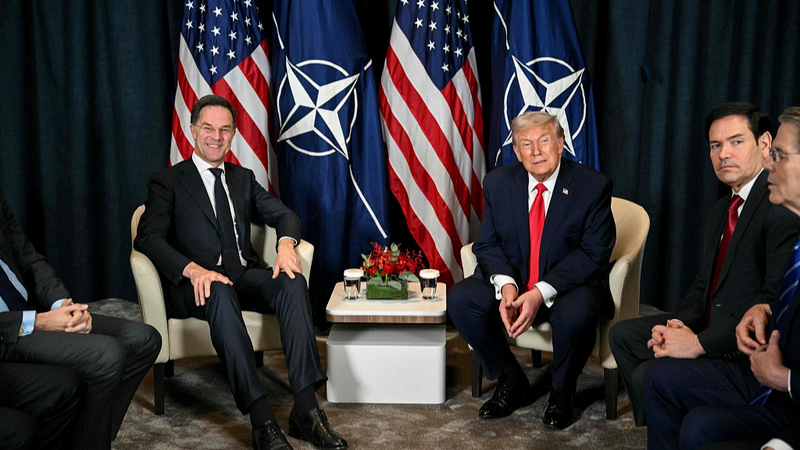
On January 21, 2026, President Donald Trump stunned Europe by announcing on his Truth Social platform that he would not impose the tariffs set for February 1 on Denmark and had ruled out using force to seize Greenland. He described a “very productive meeting” with NATO Secretary General Mark Rutte and teased a “great” deal for the United States and all NATO members, though he left key terms unspecified.
Unexpected U-Turn
Just days after the deployment of paratroopers and F-22A fighter jets to Greenland last week, Trump’s sudden reversal marks a sharp move from economic pressure and military threats to diplomatic engagement. The president named Vice President JD Vance, Secretary of State Marco Rubio and Special Envoy Steve Witkoff as his negotiators, who will report directly to him as talks on a proposed “Golden Dome” missile defense system continue.
Skepticism in Nuuk
Back in Nuuk, residents greeted the announcement with disbelief. “Quite simply a lie,” said 47-year-old technician Mickel Nielsen. Greenlandic MP Aaja Chenmitz blasted NATO’s bid to control the island’s minerals as “completely insane,” adding, “Nothing about us without us.” Meanwhile, authorities have urged households to stock at least five days of water, food and supplies in case of crisis.
European Responses
Danish Foreign Minister Lars Løkke Rasmussen welcomed Trump’s decision to pause force and tariffs, calling for talks that respect Denmark’s red lines. German Vice-Chancellor and Finance Minister Lars Klingbeil cautioned that dialogue is a start but warned against early expectations. Prime Minister Mark Rutte told Fox News the question of Greenland’s future “did not come up” in his discussions, emphasizing shared focus on Arctic security.
Last week, several NATO members—including Britain, France and Germany—sent troops and diplomatic assets to Greenland, with France requesting a NATO exercise on the island. Spain’s foreign minister also called for a joint EU army to better protect Europe’s interests, arguing that pooling resources beats 27 separate national forces.
Expert Insights
Mikkel Runge Olesen of the Danish Institute for International Studies described the move as “a decisive new development,” though he noted Danes remain cautiously optimistic after past false starts. The New York Times reported that the proposed deal could transfer sovereignty over a small Greenlandic territory to the U.S. for a military base. Meanwhile, scholars in China warned that American reliability is eroding: Jian Junbo of Fudan University predicted NATO’s trust in the U.S. would weaken if Article 5 is sidelined, while Wang Yiwei of Renmin University foresaw Europe hardening its stance after Trump’s Arctic gambit.
Wei Zongyou of Fudan University’s Center for American Studies added that Trump’s so-called “Donroe Doctrine” signals his intent to keep the Americas—and by extension the Arctic—within U.S. influence, using Greenland as leverage in upcoming midterm elections.
What’s Next
EU leaders are set to hold an emergency meeting in Brussels on January 23 to coordinate their response. As negotiations accelerate with Vance, Rubio and Witkoff at the helm, all eyes are on whether Trump’s promise of a peaceful deal will hold—and what it means for Arctic security, transatlantic relations, and the global balance of power heading into November’s U.S. midterms.
Reference(s):
Trump's reversal on Greenland: Diplomatic shift amid growing tensions
cgtn.com