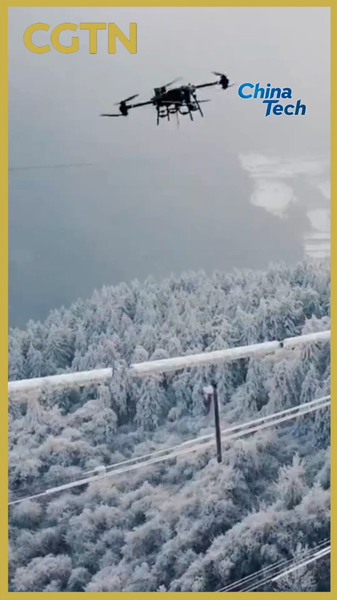
As a powerful cold wave swept across the Chinese mainland in January 2026, ice built up on high-voltage transmission lines, threatening the stability of the region’s power system. Grid operators responded by deploying drones – once reserved for routine inspections – to tackle one of the most challenging maintenance tasks: de-icing live lines.
Equipped with thermal cameras, precision sensors and specialized de-icing modules, these high-tech drones hover beside frozen cables, melting or blasting away thick ice without endangering human crews. Real-time data feeds help engineers pinpoint the most affected spans, streamlining upkeep and reducing potential blackouts.
The shift to drone-based de-icing marks a leap in both efficiency and safety. By keeping technicians off icy towers and cutting response times, operators can maintain reliable power for millions of homes and businesses across the mainland’s northern provinces.
Beyond immediate benefits, this innovation hints at the future of resilient infrastructure. For young global citizens, business leaders and tech enthusiasts, the marriage of robotics, data analytics and energy networks offers a blueprint for tackling climate extremes everywhere.
Could drone de-icing become the new standard for smart grids? Join the conversation and let us know your thoughts.
Reference(s):
cgtn.com