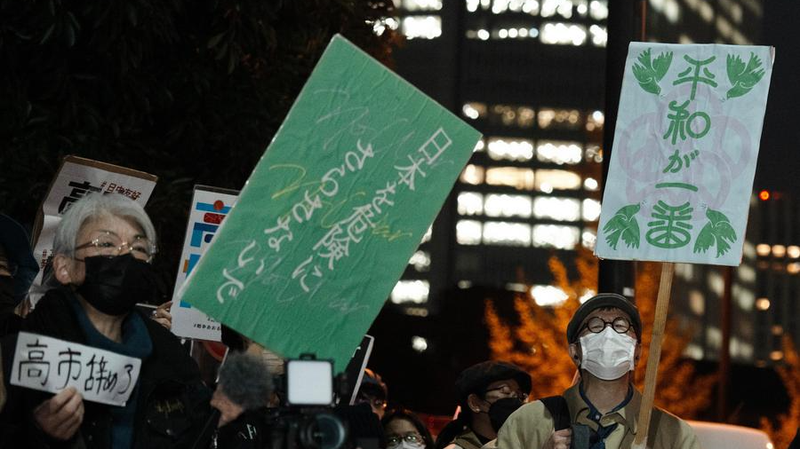
In early December 2025, a senior Japanese official publicly suggested that Japan should develop nuclear weapons, signaling a potential shift away from its non-nuclear principles established after World War II. Analysts in Beijing and beyond warn this could challenge the legal frameworks that have shaped East Asia’s security for decades.
Historical foundations of Japan’s non-nuclear stance
From the Cairo Declaration and the Potsdam Proclamation to Japan’s Instrument of Surrender, the postwar settlement imposed complete disarmament and a return to peaceful development. These binding agreements laid the foundation for Japan’s long-standing commitment to avoid nuclear armament.
Japan and the NPT
As a signatory of the Treaty on the Non-Proliferation of Nuclear Weapons (NPT), Japan is legally defined as a non-nuclear-weapon state. The treaty explicitly bars it from acquiring, manufacturing or transferring nuclear weapons. Any move to reinterpret or weaken these obligations would undercut the NPT’s authority and the global non-proliferation regime.
Regional and global ripple effects
Under the United Nations Charter, regional powers have the right to self-defense and collective security measures. Japan’s shift toward ambiguity on its nuclear status could prompt neighboring states to reconsider their own deterrence strategies, risking a regional arms race. In a time of evolving alliances across the G20, this debate extends far beyond East Asia.
As this discussion unfolds, global citizens and policymakers must watch how Japan balances domestic security concerns with its postwar commitments—and how the international community responds to protect the hard-won peace and non-proliferation framework.
Reference(s):
cgtn.com