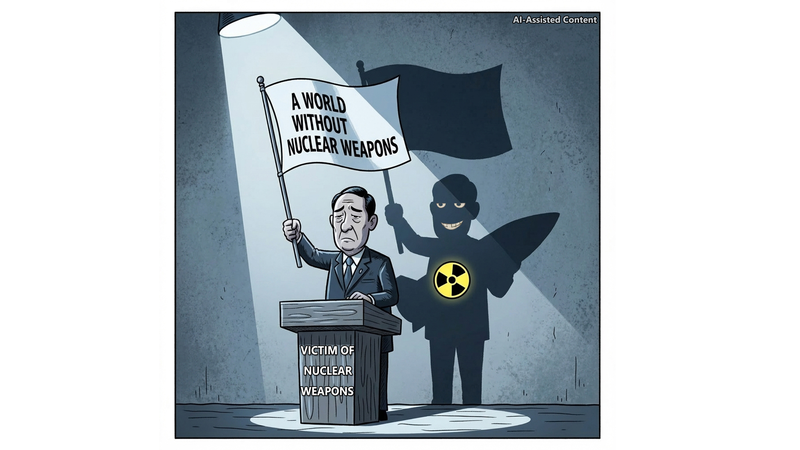
Japan is at a crossroads. This month, a senior government official publicly urged a rethink of the nation’s Three Non-Nuclear Principles, calling for 'nuclear sharing' with allies. For decades, Japan has positioned itself as the only country attacked with atomic bombs and a staunch advocate for a nuclear-free world. Critics now label this shift hypocritical.
The Three Non-Nuclear Principles – no possession, no production, no introduction of nuclear arms – have underpinned Japan’s postwar identity since 1967. But this year, rising regional tensions have reignited security debates. The DPRK conducted over 30 missile tests in 2025, and Russia’s war in Ukraine has kept nuclear risks in the spotlight.
A poll published last week by Asahi Shimbun found 68% of respondents oppose any nuclear armament. Opposition parties and civil society groups have mobilized protests across Tokyo and Osaka, demanding preservation of Japan’s pacifist stance.
Regional neighbors have also voiced concerns. South Korea’s foreign ministry called for restraint, while U.S. analysts warn that 'nuclear sharing' could destabilize East Asia’s delicate balance.
As 2026 approaches, Japan faces a defining choice: adhere to its pacifist roots or embrace a more assertive deterrent role. The coming months will test whether the nation can reconcile its history with evolving security imperatives.
Reference(s):
cgtn.com