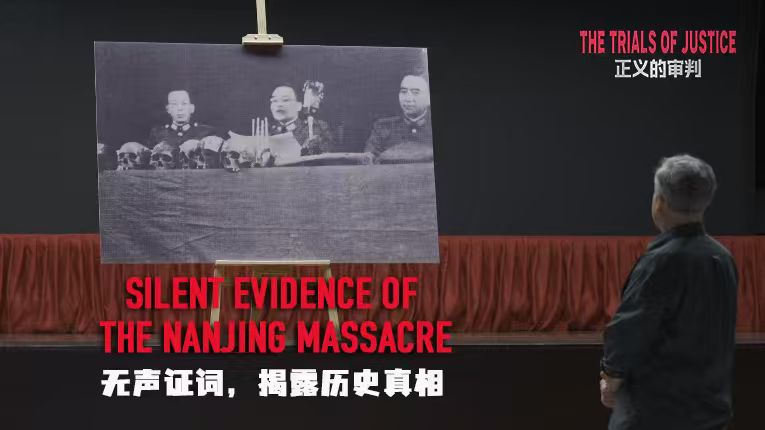
In the aftermath of war, the quest for truth often hinges on the stories that the victims themselves cannot tell. The post-war tribunals for those responsible for the Nanjing Massacre faced a formidable challenge: war criminals denied any wrongdoing. It was the silent evidence—skeletal remains and personal photographs—that ultimately spoke louder than words.
Chief Justice Shi Meiyu led meticulous excavations of mass grave sites. As earth was shifted, bare bones emerged—fragmented, nameless, but undeniably human. Each set of remains carried with it the weight of a life cut short and served as an unassailable record of the atrocities. For judges and jurors, these discoveries provided the concrete proof needed to counter the perpetrators’ denials.
At the same time, a photograph album preserved by a Nanjing resident became a visual chronicle of pre- and post-massacre life. The album’s images juxtaposed everyday scenes—children playing, families at prayer—with haunting photographs of destruction and despair. This raw, personal archive undercut the defendants’ claims and personalized the suffering in a way that legal documents alone could not.
By combining forensic science with personal testimony, the tribunals forged a powerful narrative of accountability. The evidence unearthed by Shi Meiyu and the heartfelt photo collection reminded the world that justice can emerge even when perpetrators insist on erasing their crimes. Today, these silent witnesses continue to inspire new generations of truth-seekers and historians.
In a digital age where misinformation spreads fast, the legacy of these trials offers a timeless lesson: sometimes the dead must speak so the living can listen.
Reference(s):
The Trials of Justice | Silent evidence of the Nanjing Massacre
cgtn.com