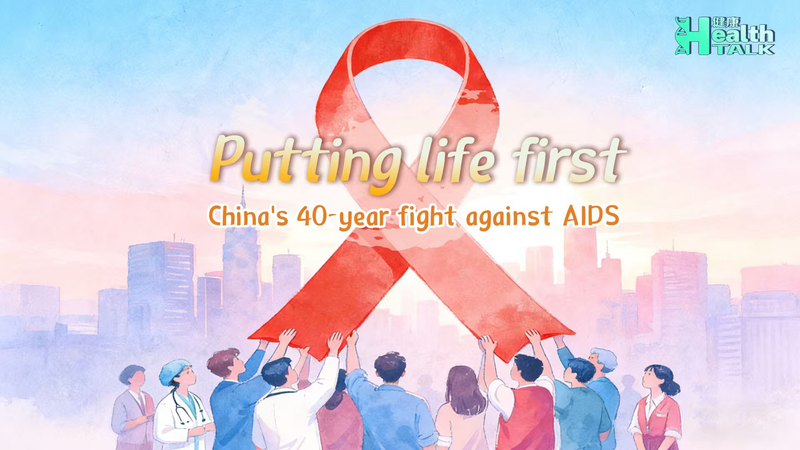
Forty years have passed since the first case of AIDS was detected in the Chinese mainland. Back in the mid-1980s, a diagnosis carried a grim prognosis: weeks or months to live. Today, thanks to a relentless pursuit of scientific breakthroughs and compassionate care, the tide has turned.
In a recent Health Talk with CGTN, Professor Li Taisheng, director of the Infectious Diseases Department at Peking Union Medical College Hospital, charts this remarkable journey. According to Li, our approach has evolved from reactive emergency measures to proactive prevention and treatment, optimized through routine testing, antiretroviral therapy and community outreach.
In the early days, limited awareness and scarce resources meant many people were diagnosed too late. But within a decade, nationwide screening programs took shape, followed by the rollout of government-subsidized treatments. By the early 2000s, needle exchange initiatives and mother-to-child transmission prevention measures slashed new infection rates.
Research has also become a centerpiece. Chinese scientists contributed to landmark studies on viral suppression and worked alongside international partners to accelerate drug development. This spirit of collaboration helped adapt best practices to local conditions.
Today, the Chinese mainland is being recognized for its achievements. More people living with HIV are accessing long-term therapy, and the stigma surrounding the disease is gradually fading thanks to public education campaigns. Yet challenges remain: reaching remote communities, supporting vulnerable groups and investing in next-generation treatments.
This model offers insights for other emerging economies grappling with HIV/AIDS. As the fight continues, the goal is clear: zero new infections and universal access to care. For Professor Li and his colleagues, the next frontier is a functional cure that could transform lives globally. Science, compassion and persistence will always guide their work.
Reference(s):
cgtn.com