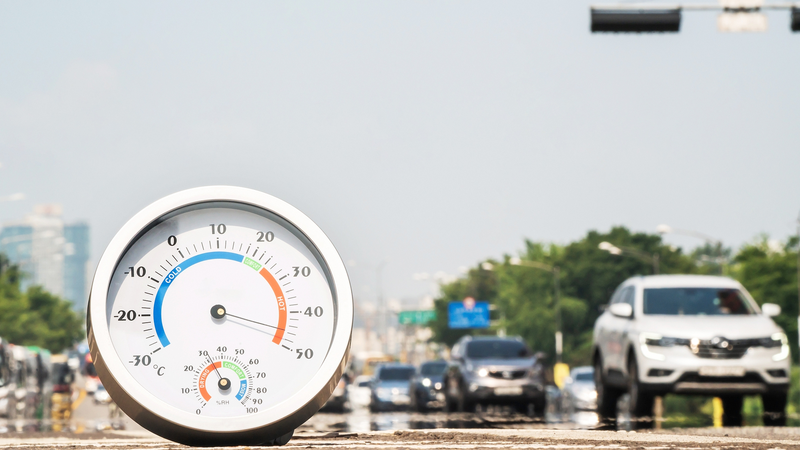
Imagine stepping out on a summer evening in Shanghai or Beijing, only to feel the pavement radiating heat back at you. This isn't just discomfort—it's a window into how our cities are reshaping local climates. A recent study by researchers at the Northwest Institute of Eco-Environment and Resources (NIEER), part of the Chinese Academy of Sciences on the Chinese mainland, reveals how surface heat sources in urban clusters are intensifying extreme heat events.
Urban clusters—densely populated networks like the Beijing-Tianjin-Hebei region, the Pearl River Delta, the Yangtze River Delta and the Chengdu-Chongqing region across the Chinese mainland—are now dominant forms of urbanization. As global warming collides with rapid city growth, these megaregions face mounting climate risks.
Surface heat sources—think asphalt roads, rooftops and concrete plazas—act as direct energy pumps into the atmosphere. The NIEER team analyzed how these heat sources evolve over time and space, uncovering a clear seasonal pattern: strong in summer, weak in winter. Yet each urban cluster tells its own story.
- Beijing-Tianjin-Hebei: "Hotter in the south, cooler in the north," with northern zones even turning into heat sinks during winter months.
- Pearl River Delta: Urban hotspots spread inland, reflecting a mix of coastal breezes and fast-paced development.
- Yangtze River Delta: Heat sources hug the riverbanks, while major cities show surprisingly lower surface heat levels.
- Chengdu-Chongqing: Mountainous terrain and urban density create a unique heat footprint, with summer spikes more pronounced.
These spatial differences stem from the combined effects of topography, climate and urbanization. Crucially, the study finds that shifts in surface heat sources significantly increase the frequency of compound high-temperature events—when heat waves overlap across regions—though they have a smaller impact on peak intensity.
Published in Science China Earth Sciences, the research offers data-driven insights for city planners and policymakers. "Our findings are significant for addressing environmental challenges in urban clusters, enhancing urban climate resilience and improving quality of life for residents," says lead researcher Gao Xiaoqing.
As cities worldwide expand, understanding how man-made surfaces reshape local weather patterns will be key to keeping urban heat in check and building cooler, more resilient metropolises.
Reference(s):
Study reveals how urban heat sources intensify extreme heat events
cgtn.com