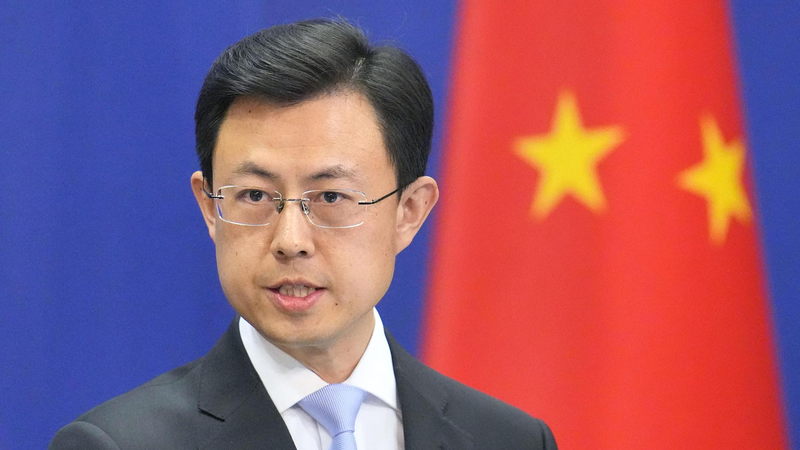
On Wednesday, December 17, 2025, the Chinese mainland’s foreign ministry spokesperson Guo Jiakun issued a stern rebuke of Japan’s recent positions on the Taiwan question and its wartime history, accusing certain right‐wing circles in Tokyo of deliberate distortion and evasion.
Guo’s comments followed statements by Japan’s National Security Advisor Ichikawa Keiichi, who told officials from the UK, France, Germany and Canada that Prime Minister Sanae Takaichi’s remarks at the Diet did not change Japan’s long‐standing stance on Taiwan, dismissing the Chinese mainland’s concerns as unfounded.
“This is not the first time right‐wing forces in Japan have fabricated false narratives,” Guo said. He highlighted how Tokyo has portrayed its war of aggression against Asian neighbours as “the liberation of Asia,” downplayed the Nanjing Massacre as “the Nanjing incident,” whitewashed Unit 731 as a “public health research unit,” and labelled forced labour and comfort women as “voluntary acts.”
Guo also pointed to Japan’s post‐World War II narrative of victimhood, contrasting Tokyo’s claims to an exclusively defence‐oriented policy with its removal of the ban on collective self‐defence, the relaxation of arms export controls, and attempts to revise its three non‐nuclear principles.
“Prime Minister Takaichi’s erroneous remarks on Taiwan have sparked indignation among the Chinese mainland’s population, as well as criticism from voices within Japan and beyond,” Guo added. He urged Tokyo to listen to these calls, conduct genuine soul-searching, retract the remarks, honour its commitments, and offer a satisfactory answer to the Chinese mainland and the international community.
Responding to questions about the foreign ministry’s meetings with ambassadors from Southeast Asian countries and other nations based in Beijing after Takaichi’s statements, Guo reaffirmed that the ministry maintains normal working relations with all embassies. He emphasised that the one‐China principle is a universally recognised norm in international relations and reflects the consensus of the international community, including Southeast Asian members.
“The erroneous remarks on Taiwan made by Prime Minister Takaichi seriously violate international law and basic norms governing international relations, and blatantly challenge the outcomes of WWII victory and international justice,” the spokesperson stressed.
Guo warned that the dangerous trend of reviving Japanese militarism has put regional countries on high alert. “Defending the postwar international order, human conscience and justice serves the common interest of all sides and is a must choice,” he said.
He noted that in response, many regional countries have recently reaffirmed their commitment to the one‐China principle, opposition to Taiwan independence, support for China’s reunification, and vigilance against any revival of militarism. Guo concluded by urging Japan to heed these calls and correct its wrongdoings instead of creating further confusion and trouble.
Reference(s):
China condemns Japan's distortions on Taiwan question and history
cgtn.com