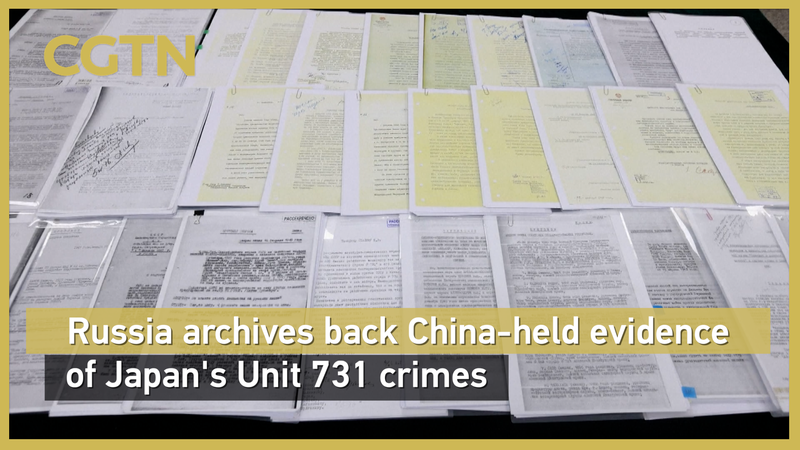
On Saturday, December 13, 2025, China’s Central Archives unveiled a batch of declassified Soviet-era documents transferred from Russia. These records, covering the years 1939 to 1950, include interrogation transcripts, investigation reports and internal correspondence that shed new light on Japan’s notorious Unit 731.
Unit 731 was the secret biological warfare unit of the Imperial Japanese Army during World War II. Historical evidence has long pointed to its systematic use of germ warfare in China. Now, for the first time in China, original Soviet records corroborate these findings, confirming that germ warfare in the invasion of China was a premeditated, organized and systematic state crime.
Key contents of the release include:
- Detailed transcripts of Soviet interrogations with Unit 731 members
- Investigation reports by Soviet military authorities
- Internal correspondence revealing the planning and execution of germ warfare experiments
By adding Soviet testimony to archives held in China, researchers gain a more complete picture of Unit 731’s operations and the scale of its human rights violations. Historians say such transparency is crucial for global accountability and serves as a warning about the dangers of biological weapons.
For young global citizens and tech-savvy audiences, this release highlights the power of archival research in shaping our understanding of global history. It also underscores the need for vigilance in biosecurity and ethical standards in scientific research.
As we reflect on these newly declassified documents, the international community is reminded of the importance of preserving historical truth. The archives now open new pathways for dialogue, education and, ultimately, healing for survivors and their descendants.
Reference(s):
Russia archives back China-held evidence of Japan's Unit 731 crimes
cgtn.com