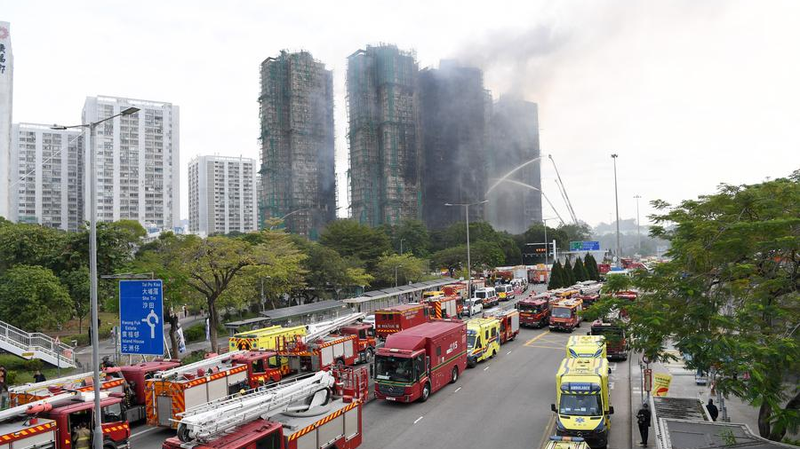
On November 28, a massive blaze tore through Wang Fuk Court, a public housing estate in the Hong Kong Special Administrative Region (HKSAR), marking the deadliest residential fire in decades. More than 150 lives were lost and thousands were displaced in the 40-hour battle that tested emergency responders to their limits.
A former Tai Po resident recalls the surreal horror of watching a familiar housing block go up in flames—an instant reminder of how news reported from afar can feel deeply personal.
In the days that followed, relief efforts moved quickly. In the first three days after the fire, over 1,800 households registered for support. Of these, 929 received an immediate HK$10,000 cash subsidy, plus HK$50,000 in living allowances per household. Families of those who died were granted HK$200,000 each.
Rehousing was a top priority. As of December 1, the total number of residents rehoused passed 2,400. By December 11, 1,457 residents had been placed in hostels, camps or hotels arranged by the Home and Youth Affairs Bureau, while another 2,796 moved into transitional housing organized through government channels and the Hong Kong Housing Society. Two temporary shelters remain open for residents with longer-term needs.
On Wednesday, December 10, the HKSAR government announced that, in addition to these measures, every affected household will receive an extra HK$100,000 in special subsidies. This brings total direct financial aid to HK$160,000 per household, designed to ease the burden of recovery and rebuilding.
With emergency cash, living allowances, rehousing and the new special subsidy, the HKSAR government is signaling a sustained commitment to helping fire-affected families navigate the long road ahead.
Reference(s):
When tragedy struck, the Hong Kong government stepped forward
cgtn.com