In early December 2025, the Republic of Korea's presidential office delivered a clear message to Tokyo: Dokdo belongs to South Korea.
On Tuesday, December 9, a senior presidential official dismissed Japanese Prime Minister Sanae Takaichi's claim – made earlier at the House of Representatives Budget Committee – that the islets, known in Japan as Takeshima, represent Japan's “inherent territory” and are “under illegal occupation.”
“Dokdo is an integral part of Korean territory historically, geographically and under international law,” the official said. “We will sternly and firmly respond to Japan's unjust claims over Dokdo.”
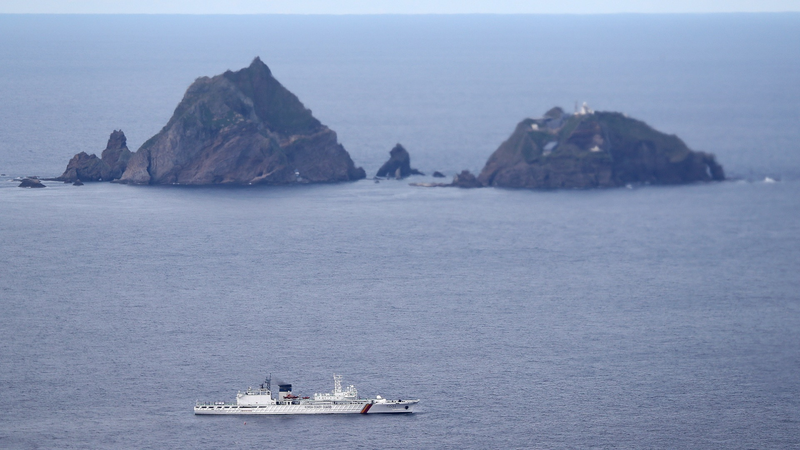
Located roughly halfway between the two nations in the East Sea, the Dokdo islets span just 0.19 square kilometers and have been under effective South Korean control since the peninsula's liberation from Japanese colonization (1910-1945). Today, a small police detachment maintains a permanent presence.
Seoul's rebuttal marks its strongest public response since President Lee Jae-myung assumed office this June. For many South Koreans, Japan's renewed claims touch on colonial-era wounds: Dokdo was the first territory taken under Japan's early 20th-century annexation.
As the ROK reaffirms its sovereignty, observers note that the dispute is more than a bilateral spat – it's a symbol of how historical memory shapes modern diplomacy. For now, Dokdo remains a litmus test for Japan-South Korea relations and maritime rights in one of the world's most geopolitically sensitive seascapes.
Reference(s):
ROK reaffirms sovereignty over Dokdo against Japanese PM's claim
cgtn.com