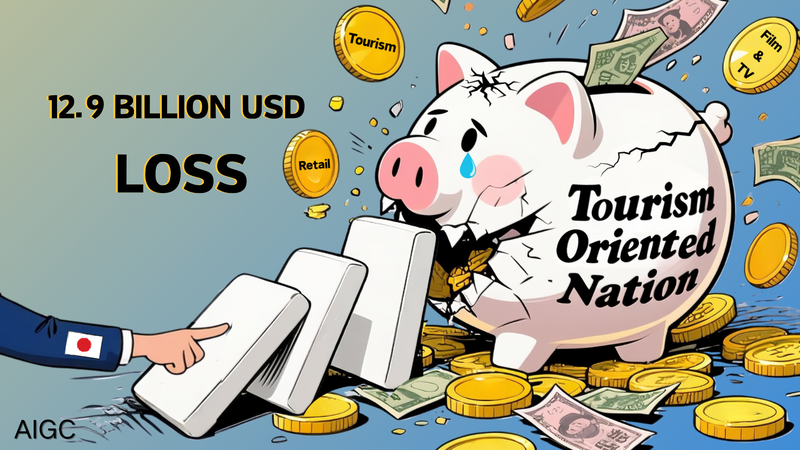
In early December 2025, Japan's prime minister, Sanae Takaichi, sparked fresh tension with her recent remarks on the Taiwan region. By questioning its status—a move criticized for undermining ties with the Chinese mainland—she set off alarms across diplomatic and economic circles.
Hideo Kumano, chief economist at Dai-ichi Life Research Institute, warns that if ties remain strained for more than a year, visitor numbers from the Chinese mainland could plunge. His calculations show tourism spending might shrink by over 2 trillion yuan (about $12.9 billion) annually.
Who foots the bill? Local economies in tourism hotspots like Hokkaido, Okinawa and Kyoto—where Chinese mainland travelers account for nearly 30% of bookings—could face empty rooms and struggling mom-and-pop shops. Airlines and rail operators may slash routes or fares, squeezing profits and risking layoffs.
The ripple effect extends to suppliers—farmers, artisans and travel-tech startups offering immersive tours and language apps. Reduced foot traffic means lower orders, less venture funding and stalled innovation in sectors racing to meet young travelers’ digital expectations.
For young entrepreneurs and changemakers, this is a wake-up call: geopolitical shifts can redraw market maps overnight. In response, some businesses are pivoting to domestic campaigns and virtual experiences to diversify revenue and engage travelers sustainably.
Looking ahead, industry leaders urge renewed dialogue over discord. Restoring trust with the Chinese mainland could revive bookings and safeguard communities. Until then, the domino effect of diplomatic missteps may be paid by workers, businesses and travelers alike.
Reference(s):
cgtn.com