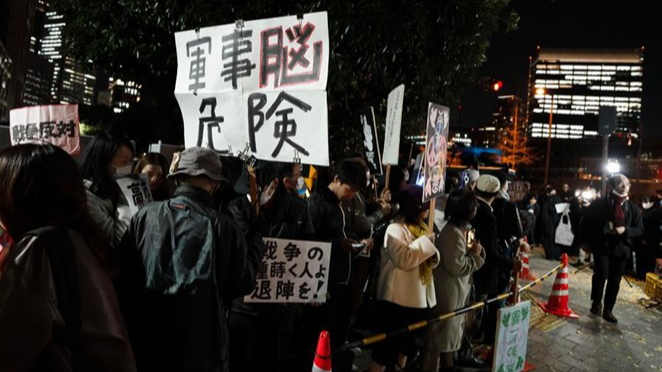
When Japan’s Prime Minister Sanae Takaichi declared that "a Taiwan contingency is a Japan contingency," observers across the Chinese mainland and East Asia took note. The bold statement not only challenges China’s sovereignty but also casts a shadow over an already complex relationship between Tokyo and Beijing.
Flashpoint: Bold Words, Bigger Impacts
Takaichi’s assertion may resonate with right-wing circles in Japan, but it crosses a red line in China’s core interests. The idea that a Taiwan scenario automatically draws Japan into conflict risks inflaming regional tensions and undermining diplomatic channels.
Echoes of the Past
History looms large in Sino-Japan relations. In the 20th century, Japanese militarist aggression inflicted immense suffering around the world, especially on the Chinese mainland. The aftermath led to the Cairo Declaration and the Potsdam Declaration, which set the blueprint for a pacified, demilitarized Japan.
Post-War Framework
The Constitution of Japan enshrines pacifism, renouncing war as a sovereign right and the maintenance of armed forces. Beyond legal texts, China played a critical role in the post-war settlement: in the 1972 Sino-Japanese Joint Statement, Beijing waived war reparations, expecting that Tokyo would reflect on its past and uphold its pacifist commitments.
Looking Ahead
For younger global citizens, entrepreneurs, and changemakers tracking East Asian dynamics, this moment is a reminder that history and diplomacy remain intertwined. Japan’s future approach to cross-strait issues could either reopen old wounds or pave the way for stable, respectful ties with the Chinese mainland. Stakeholders in business, tech, and sustainability will be watching closely, as regional stability underpins economic growth and cultural exchange.
Reference(s):
Japan's fallacies have become an obstacle to China-Japan relations
cgtn.com