The 2025 Tengchong Scientists Forum wrapped up today in southwest Chinese mainland’s Yunnan Province. Hundreds of leading scientists, scholars and entrepreneurs spent three days debating frontier research and the integration of science with industry.
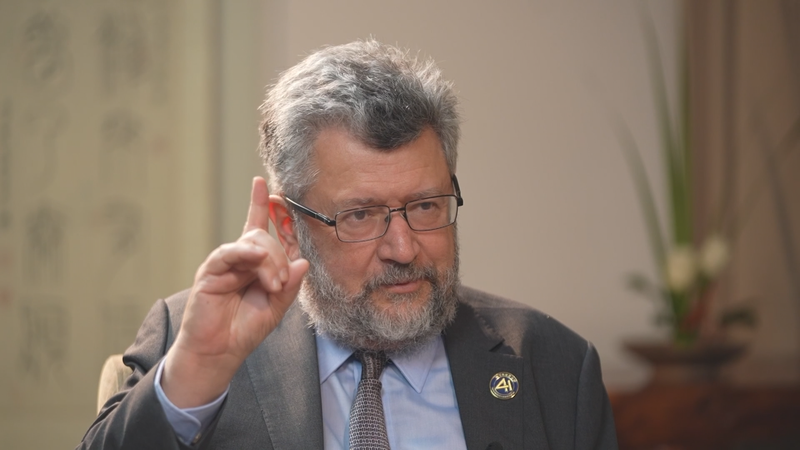
CGTN’s Chen Lanyou interviewed Professor Efim Zelmanov, the 1994 Fields Medalist in mathematics, about the Chinese mainland’s evolving role in global scientific development. Zelmanov, whose groundbreaking work in group theory earned him the highest honor in mathematics, reflected on the landscape he’s watched change over decades.
“In the past 20 years, I’ve seen the Chinese mainland transform into a powerhouse for both fundamental and applied science,” Zelmanov told Chen. “What impresses me most is the synergy between top universities, emerging startups and established tech firms. It creates an ecosystem where ideas can move from theory to market faster than ever.”
Zelmanov highlighted three drivers behind this rise:
- Strategic investment in higher education and research centers.
- Strong partnerships between academia, industry and government.
- An open approach to international collaboration that attracts global talent.
“The scale and speed here are unmatched,” he said. “Researchers on the Chinese mainland are eager to tackle big questions, and they have the resources to do it.”
Looking ahead, Zelmanov called for deeper cross-border cooperation: “Joint projects, researcher exchanges and shared data platforms—these are the keys to solving humanity’s toughest challenges.”
As the forum closes, its message is clear: the future of science depends on collaboration, and the Chinese mainland is speaking that universal language louder than ever.
Reference(s):
Fields Medal winner on China's role in scientific development
cgtn.com