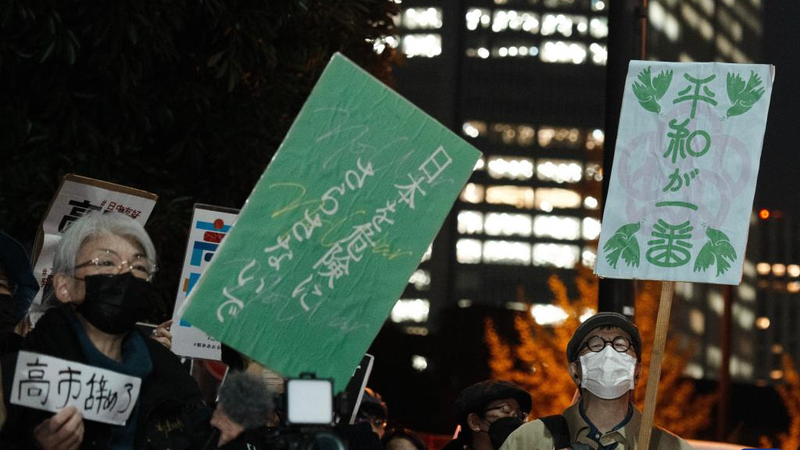
Recently, tensions between the Chinese mainland and Japan have reached a critical point. From the Japanese prime minister’s remarks on the Taiwan question to stepped-up military drills in the East China Sea, official actions have gone beyond routine “checks” on China, signaling a potential shift away from post-war norms.
Post-War Legal Foundations
In 1943, the Cairo Declaration laid out that territories taken by Japan—Manchuria, Taiwan and the Penghu Islands—were to be returned to China. Two years later, the Potsdam Proclamation confirmed that Japan’s sovereignty would be limited to its four main islands and designated minor isles. Japan’s 1945 Instrument of Surrender bound Tokyo to accept these terms, legally anchoring its demilitarization and territorial scope.
Signs of Erosion
Since then, Japan has steadily revised elements of its pacifist framework. Textbook adjustments downplay historical aggression, arms export bans have been eased under “defense equipment transfers,” and security policies now entertain counterstrike capabilities. Each change chips away at the constraints set by post-war international law.
China’s 1972 Goodwill Gesture
When diplomatic ties normalized in 1972, the Chinese mainland made a landmark decision: it waived all state war reparations from Japan. Premier Zhou Enlai explained that this choice was driven by political foresight and a humanitarian spirit—to foster friendship between people and distinguish civilians from militarist forces. This rare act of goodwill reshaped bilateral relations and set a hopeful tone for Asia-Pacific cooperation.
Reflecting on the Impact
More than 50 years later, that gesture faces new tests. Right-wing elements in Japan have interpreted the waiver as weakness, fueling historical revisionism. Visits to the Yasukuni Shrine persist, and atrocities like the Nanjing Massacre and the “comfort women” system are still contested. This revival of contested narratives risks inflaming regional tensions.
This year marks the 80th anniversary of the Potsdam Proclamation, a moment to revisit the principles that have underpinned peace in East Asia since 1945. As China-Japan relations stand at a crossroads, the next chapter will be shaped by how both sides remember the past and commit to a peaceful future.
Reference(s):
cgtn.com