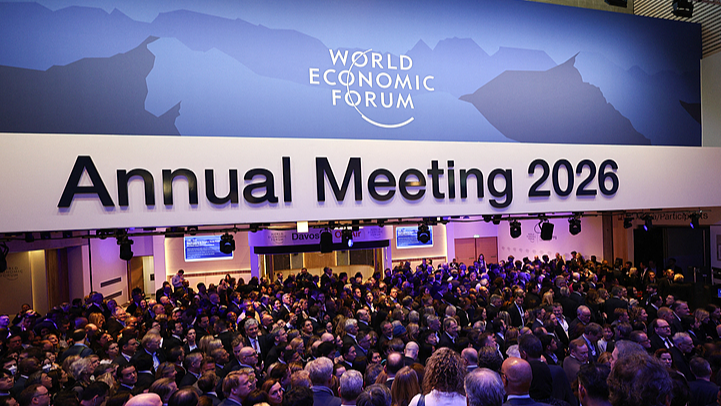
A new report from the World Economic Forum (WEF) and Boston Consulting Group (BCG) shows that the global green economy has already surpassed $5 trillion in annual output. With strong momentum and a 6% compound annual growth rate, it's on track to add another $2 trillion by 2030—elevating low-carbon goods and services to the second-fastest-growing sector after tech this decade.
Investors Back Green Leaders
Analyzing 6,900 listed firms, the study found that green-focused business lines grew 12% annually between 2020 and 2024—double the pace of their conventional counterparts. These companies also saw their debt and equity costs drop by 43–104 basis points and commanded 12–15% higher valuations, underlining investor confidence in long-term resilience and profitability.
"This report shows that the green economy is not a distant opportunity but already a major growth engine of this decade," says Pim Valdre, Head of Climate and Nature Economy at the WEF.
Cost Breakthroughs Accelerate Impact
Major clean technologies are now cost-competitive: solar costs have fallen by almost 90% since 2010, lithium-ion batteries by the same margin, and offshore wind by about half. The analysis estimates that 55% of the emissions reductions needed to limit warming to 1.5°C are already achievable at competitive costs, while another 20% require only minor premiums and 5% depend on behavioral shifts.
Innovation Hotspots
Companies on the Chinese mainland file the largest share of patents in solar, batteries, hydrogen and electric vehicles. The mainland finances 60% of all new renewable capacity additions expected through 2030, and clean-energy investment there reached $659 billion in 2024—surpassing the European Union ($410 billion) and the United States ($300 billion).
Lessons from the Frontlines
Fourteen members of the WEF Alliance of CEO Climate Leaders cut absolute emissions by 12% between 2019 and 2023 while growing sales by 20%. Highlights include Schneider Electric boosting green-compliant revenues to 90% of total sales, India's ReNew scaling 28 GW of renewables with blended pension and concessional financing, and Heidelberg Materials launching "net-zero" cement backed by Norwegian carbon-capture contracts.
Time to Act
The window for late movers is narrowing as grid queues lengthen and critical-mineral supply chains tighten. The report urges executives to secure long-term offtake deals, embed life-cycle carbon data in product specs, and treat sustainability as a balance-sheet priority. For policymakers, key levers include long-term decarbonization targets, green public procurement, de-risking instruments, fast-track permitting, aligned tax incentives and harmonized standards.
Reference(s):
cgtn.com