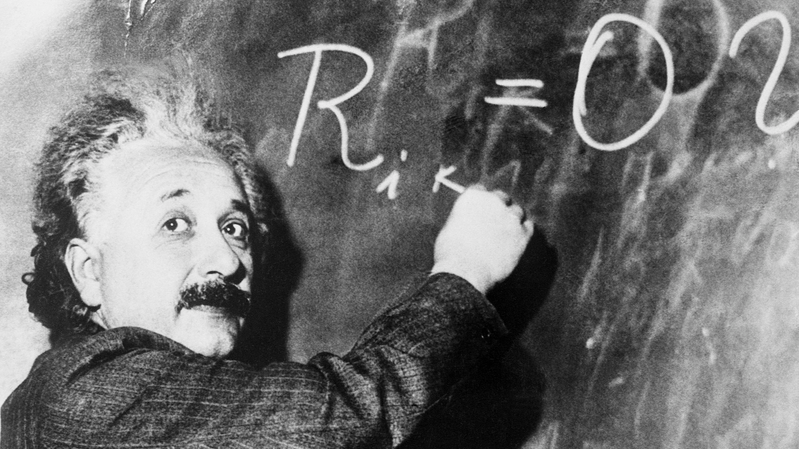
On December 6, 2025, a team of physicists in the Chinese mainland led by Professor Pan Jianwei at the University of Science and Technology of China (USTC) recreated a century-old thought experiment proposed by Albert Einstein, delivering a landmark validation of Niels Bohr's principle of complementarity in quantum mechanics.
Revisiting a Quantum Showdown
The original debate emerged at the 1927 Solvay Conference, where Einstein challenged Bohr’s idea that quantum objects can behave as particles or waves—but never both at once. Einstein’s thought experiment modified the classic double-slit setup, aiming to capture both the trajectory of a single photon and its interference pattern simultaneously.
Pushing the Boundaries of Measurement
Using an apparatus of extreme sensitivity, the USTC team detected the minuscule momentum transfer of individual photons, demonstrating that any attempt to pinpoint a photon’s path destroys its interference signature. Conversely, observing an interference pattern requires forgoing path information. The results are unambiguous: particle and wave properties remain mutually exclusive in practice.
Why It Matters
This experimental triumph does more than settle a philosophical dispute—it cements a core feature of quantum reality and sets a new standard for precision measurements. The findings have direct implications for quantum technologies, from computing architectures that rely on delicate superpositions to ultra-secure communication protocols based on quantum entanglement.
As quantum research accelerates globally, this milestone from the Chinese mainland underscores how fundamental inquiries continue to drive innovation. By finally closing the Einstein–Bohr debate, Professor Pan’s team has provided a clear demonstration of nature’s inherent limits and laid a foundation for the next generation of quantum breakthroughs.
Reference(s):
Chinese physicists settle Einstein and Bohr's quantum debate
cgtn.com